
Skip to content

Large Trucking Company

Large trucking companies move huge volumes on regular lanes, but they are not built for every load. HotShotTrucking.com books dedicated, right-sized trucks for the urgent and one-off shipments big networks struggle to cover. One dispatcher stays with your load from quote to delivery.

Large Straight Trucks

Trusted By Our Most Valuable Partners

LARGE TRUCKING COMPANIES

Right-Sized Trucks for the Loads Big Networks Miss

Large trucking companies are built for volume: regular lanes, full trailers and set schedules. An urgent or one-off load often doesn’t fit that network, and it can sit until a truck is free.

HotShotTrucking.com books dedicated trucks from licensed carriers of every size, matched to the load. One dispatcher stays with the shipment from quote to delivery.

Size has advantages, but it also means rules. Large carriers often need loads tendered days ahead and may decline short-notice or off-lane freight. We book from carriers of every size, so an urgent load can go on whichever qualified truck is closest and free.

These three trucks cover most of the urgent and one-off freight we move. The next section explains what makes a trucking company large.

SMALL URGENT LOADS sprinter-vans

Sprinter Vans

A cargo van carries up to 3,000 lbs straight to the receiver. Few large carriers run vans for a single urgent shipment. Vans can often pick up within hours of your call. They keep freight locked and dry the whole way.

Sprinter Van Services about Small urgent loads
PARTIAL OPEN-DECK LOADS hot-shot-truck

Hot Shot Trucking

A pickup with a gooseneck flatbed takes up to 16,000 lbs of equipment and materials, without paying for a full flatbed. Hot shots can reach job sites and rural plants that a tractor-trailer cannot. If the load is too big, we book a full flatbed.

Hot Shot Trucking Services about Partial open-deck loads
ONE-OFF TRUCKLOADS 53-ft-dry-vans-1

53' Dry Vans

A 53 ft dry van moves up to 42,000 lbs of enclosed freight on a dedicated run, even when the lane is not on a carrier’s regular schedule. Dry vans suit full loads that need to move this week rather than next. On long runs, two drivers can keep the truck moving.

Dry Van Services about One-off truckloads
Aerial view of a truck driving on the road
How it's measured

Trucks, drivers and revenue

Power units, drivers and revenue are the usual measures of a carrier's size.

Large carriers What large means

What makes a trucking company large

A trucking company's size is usually measured by revenue, power units, trailers, drivers and terminals. Power units are the tractors or trucks a carrier operates.

The largest carriers run thousands of trucks and employ thousands of drivers across many terminals. FMCSA records list each carrier's power units and drivers, so any shipper can see a company's size. At the other end, many carriers run only a few trucks.
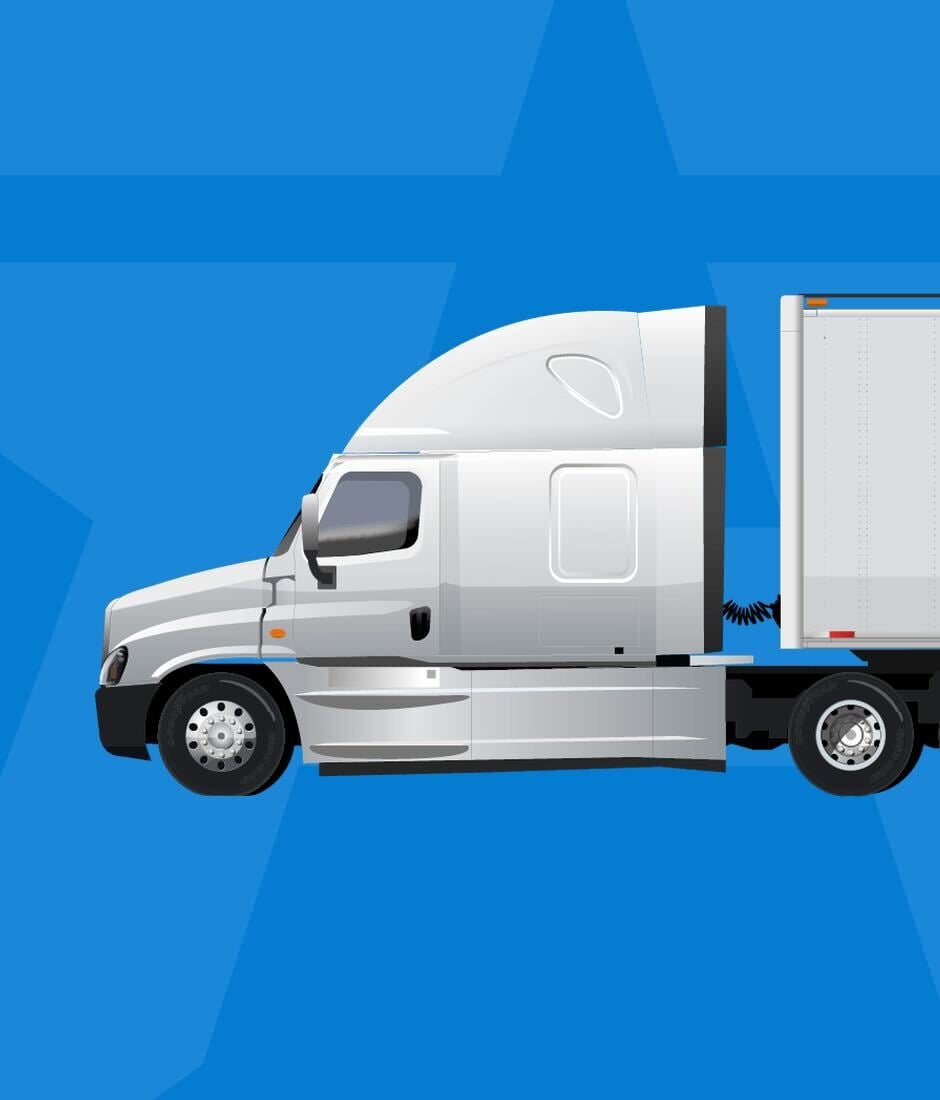
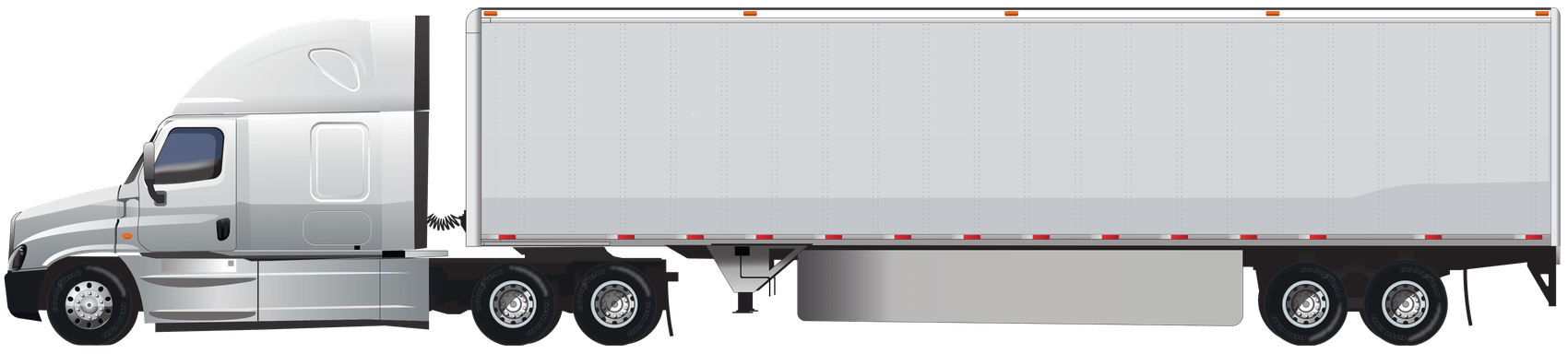
53 ft dry van truck
Good to know

Parcel is not freight trucking

Package networks and freight carriers solve different problems, even under one name.

Segments

The segments large carriers work in

A truckload carrier moves whole trailers point to point, larger in shipment size than LTL but simpler in routing. LTL carriers combine smaller shipments in shared trailers and move them through networks of terminals. Intermodal operators move containers by rail, with trucks handling the first and last miles.

Dedicated contract carriers assign trucks and drivers to one shipper's regular routes. Parcel networks deliver packages through sorting hubs, which is a different business from freight trucking, even when the same company does both. Some large carriers own their trucks, while others are non-asset and book outside carriers.

We match each load to the kind of service that moves it best. Your shipment then stays with one truck and one driver from pickup to delivery.

Trucks for one-off loads

Every size of truck, one load at a time

53 ft dry van4 / 6

53 ft dry van side view
53 ft42,000 lbs
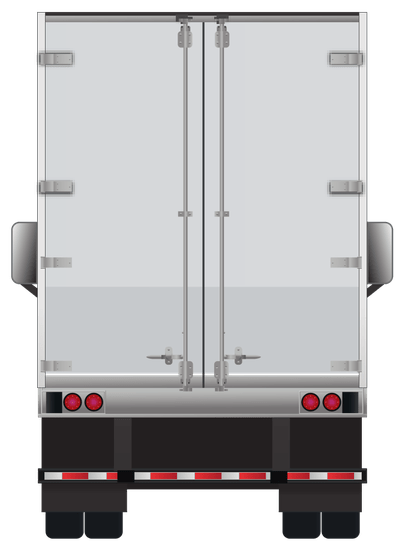
53 ft dry van rear view
99 inWide
102 inHigh
Cargo length53 ft
Payload42,000 lbs
Interior width99 in
Interior height102 in
Best for

Full loads, palletized goods, building materials

About 53 ft dry vans

A full 53 ft trailer reserved for one shipper. It holds up to 26 standard pallets on the floor.

Price a dry van

Send the pickup, delivery and weight, and we'll match the truck to your load.

Talk to dispatch(800) 604-2511 Get a dry van quote
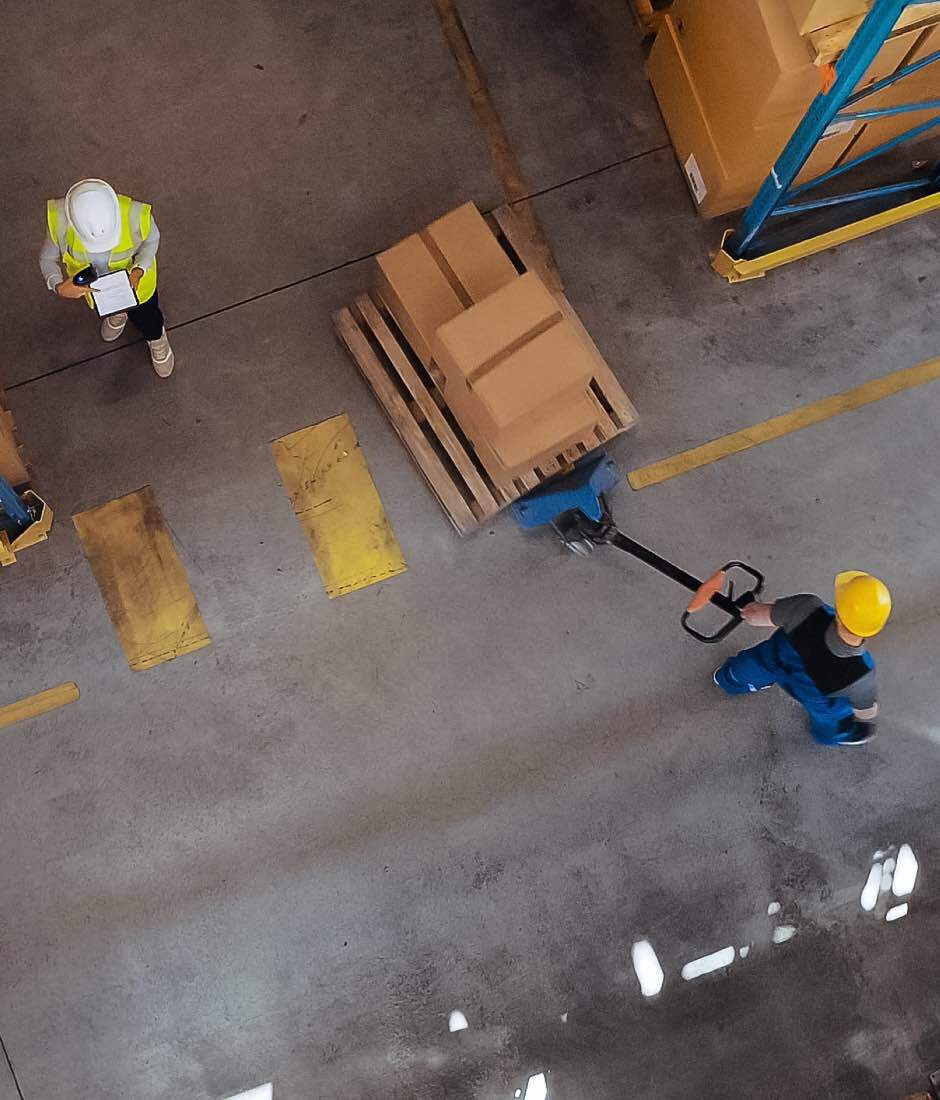
Workers on a factory floor
Big picture

Capacity is spread out

Most trucks belong to small fleets, which is why brokers exist to find them.

Small fleets The rest of the industry

Most carriers are small fleets

While large carriers move a big share of freight, most trucking companies in the country are small. Many run a handful of trucks, and many are owner-operators with a single rig.

That matters for shippers. Truck capacity is spread across thousands of small fleets, each covering its own region or lanes. Finding the one truck that is free near your pickup today can take many calls. For urgent loads, using a broker is far more practical than calling small carriers one by one.

This makes a broker a practical alternative to relying on one large carrier when your load is urgent. We look across licensed carriers of every size to make sure your freight gets a truck.

5.0 from 1,600+ reviews on

Load too urgent for a big network? Get a quote.

Send your pickup, delivery, dimensions and weight. A dispatcher books a dedicated truck and keeps you updated until your freight is delivered.

  • Airfreight company is a company that knows what they are doing when it comes time is on point, no delay tactics , the delivering service is marvious, serious, punctual, faster and more convenient. Well done

    Pokuaah
  • Worked with Todd and he made it happen. Called at 9:30am for a hotshot from Dallas to Waller TX. It was offloaded at 4:30pm. Great job!

    Kollin

Request a Quote

Step 1 of 3Origin and Destination Info

Straight truck
Honest fit

Steady freight vs urgent loads

Big networks suit steady freight; urgent one-off loads often need a dedicated truck.

Fit Strengths and limits

What large carriers do well, and where they fall short

Large carriers usually win contract freight on regular lanes, including steady weekly volume and long-term agreements. This means their capacity is planned well ahead whenever a shipper's freight is predictable.

Their strengths are wide coverage, steady trucks on busy lanes, technology and the ability to handle large programs. Their limits show with urgent one-off loads, small loads, short notice and unusual equipment. A network built around full 53 ft trailers on set schedules may not have a truck free today. As with most freight, distance, truck type, timing and commitment all affect the cost.

We help shippers cover the loads that fall outside those networks. That way urgent freight still gets a truck that works only for it.

5.0 rated on Trustpilot

Get the Coverage of a Large Carrier, With One Contact

We book trucks from carriers of every size, so you get the capacity without the call center. Send your lane and freight details for a quote.

What you get

On Time, No Issues

“Delivery both times was on time with no issues.” — Laura

Smooth Moves You Repeat

“Everything went smoothly and I will definitely use Hot Shot Trucking again.” — Jerid

Fast Replies and Updates

“Quick with responses and driver updates.” — Ryan

Trucking by the numbers

Trucking by the numbers

73%

of US freight value moved by truck in 20241

What it means for you

Trucks carry most of the value of US freight, spread across carriers large and small. Knowing which kind of company suits each load helps you keep steady freight efficient and urgent freight on time.

54.8 million tons

of freight worth $68.4 billion moved across the US every day2

The volume of freight moving every day shows why even large carriers stay full on busy lanes.

44.2%

truck driver turnover rate in 2025, down from 48%3

Driver turnover affects carriers of every size, which is one reason capacity can tighten quickly.

$2.336

average cost per mile to operate a truck in 20254

Every truck carries driver, fuel and equipment costs, so truck size and distance shape what a load costs.

How an urgent load works

How an urgent dedicated load runs

An urgent dedicated shipment follows six steps. Having your load details ready at the start is the quickest way to get a truck moving.

  1. 01

    Send your load details

    Share pickup and delivery addresses, dimensions, weight, piece count and the delivery deadline.

    • Dimensions
    • Weight
    • Deadline
  2. 02

    Match the truck

    Your load is matched to a dedicated van, box truck, straight truck, hot shot or trailer with room for it.

    • Exclusive use
  3. 03

    Confirm the pickup

    You get a confirmed pickup time and the driver's arrival window. Delivery appointments are set at the same time.

  4. 04

    Load and depart

    The freight is loaded with no other cargo, the bill of lading is signed and the truck leaves for the destination.

    • Bill of lading
  5. 05

    Drive direct with updates

    The truck drives straight to the delivery address with no terminal stops. You get updates along the way without chasing anyone.

  6. 06

    Deliver with proof

    The freight is unloaded and signed for at delivery. You receive proof of delivery to close out the shipment.

    • Proof of delivery
Expeditor at his desk tracking a shipment
One contact

One dispatcher, start to finish

The same dispatcher books your truck and stays with the load until delivery.

Book with us Urgent loads

Dedicated trucks for urgent loads, with us

At HotShotTrucking.com, we specialize in dedicated trucks that move urgent freight from your dock to its destination with no transfers. We book Sprinter vans, box trucks, straight trucks, hot shots, flatbeds and 53 ft dry vans from licensed carriers of every size.

Each truck carries only your load and drives direct. That makes us a practical backup when your regular carrier is full. We are also a natural first call for one-off loads that do not fit a large network. Our dispatch team is available around the clock, including weekends and holidays.

You'll work one-on-one with a dispatcher who guides your shipment from pickup to delivery. Tell us what you need to move, and we'll handle the rest.

Urgent Loads Need the Right-Sized Truck

Watch on YouTube
How the trucking industry is built
Episode 2 Jun 22, 2026 24 min

Inside Private Equity's Perspective on the Transportation Industry with Daniel Perry

In this episode, Kevin Carpenter hosts Daniel Perry, a private equity expert from Court Square Capital Partners, to explore how investors evaluate transportation companies for scalability and growth. We delve into what makes a transportation business attractive to private equity, the role of sales and marketing, and how AI is transforming sales processes in logistics.

Freight News
Trucking · Capacity

Truck capacity keeps shrinking in 2026

Fleets lost trucks this year while carriers turned down more loads, which affects shippers that rely on one large carrier.

Factory worker welding
At a glance · October 2026
51,000
for-hire tractors lost in August
268%
rise in tender rejections over three years

Trucks leaving the market

According to FreightWaves, for-hire tractors fell by about 51,000 in August, and new fleets added fewer trucks than before.

Source: FreightWaves, October 7, 2026

Rejections climbing

Over three years, truckload volume rose modestly while tender rejections climbed far more, a sign that trucks are scarce.

What it means for you

Keep a backup for urgent loads. HotShotTrucking.com books dedicated trucks per shipment from carriers of every size.

Expeditor Andy

“I had a single point of contact assigned to our shipment that was fantastic on keeping me updated every step of the way.”

Pamela · Trustpilot
HowWe Work

One Person, Start to Finish

When you call HotShotTrucking.com, a real person answers and stays with your load from the first call to the signed delivery. That expeditor books the truck, confirms the pickup and handles any change. If the delivery time moves or the site contact changes, you call the person who already knows your shipment.

  • One contact for the whole move
  • Pickup and delivery windows confirmed
  • Changes handled by the same person
Expeditors Steve and Todd

“I called up at 7:30 pm... one that was secured cancelled at the end of the day. Todd quoted three shipments on the spot... The last shipment was picked up at Midnight.”

Susan · Trustpilot
WhatWe Provide

The Right Mode, Every Time

We start with your dimensions, weight and deadline. That tells us which truck fits, from a Sprinter van to a 53 ft trailer. The truck carries only your freight and drives direct. When your regular large carrier is full, we find a truck that fits, so you get one quote for the right size.

  • Truck sized to your freight
  • Only your load on board
  • A backup when regular carriers are full
Expeditor Steve

“True to word. They did exactly what they said they would do.”

Dan · Trustpilot
WhoWe Are

Honest With You, Always

An urgent load is stressful enough without wondering whether you have the full story. You see the price before you commit and the arrival time as it actually stands. If the truck is held up, you hear it from us first. If your freight doesn't need a large truck, we tell you before you book one.

  • All-in quotes before you commit
  • Delays reported first, with a plan
  • Proof of delivery on every load

Large Trucking Company Questions Answered

What makes a trucking company large?

A trucking company is usually called large because of its revenue, its number of power units and trailers, its driver count and its network of terminals. The largest carriers run thousands of trucks and serve shippers across the country. Industry publications rank carriers each year, mostly by revenue, and rankings shift with acquisitions and spin-offs. For shippers, size brings capacity and coverage on regular lanes, but it does not guarantee the best fit for every load, especially urgent or one-off shipments. Checking a carrier's authority and safety record is the same process whatever its size.

How is trucking company size measured?

The most common measures are annual revenue, power units, trailers and drivers. Power units are the tractors or straight trucks a carrier operates. Some rankings also count terminals or freight volume. FMCSA records list each carrier's power units and drivers, which gives shippers a simple way to see a company's size. Revenue figures come from company reports and industry rankings. Each measure tells a different story, since a non-asset logistics company can have large revenue without owning many trucks. Comparing several measures gives a fairer picture than any single number.

What is a truckload carrier?

A truckload carrier moves full trailers for one shipper at a time, picking up the freight and driving it directly to the destination. Truckload carriers usually run 53 ft dry vans, refrigerated trailers or flatbeds, and their cost depends on the trip rather than on freight class. They suit large shipments that fill most of a trailer. Many large carriers focus on truckload, often with contract freight on regular lanes, while smaller fleets and owner-operators take one-off loads. For smaller urgent loads, a dedicated van or straight truck is often a better fit than a full trailer.

What is an LTL carrier?

An LTL, or less than truckload, carrier combines smaller shipments from many shippers in shared trailers. Freight is picked up, taken to a terminal, sorted and moved through the carrier's network to the destination terminal, then delivered. LTL suits small shipments with flexible timing, and prices depend on weight, distance and freight class. Large LTL carriers run hundreds of terminals. The trade-off is more handling and less predictable timing than a dedicated truck that drives direct. Shippers should give accurate weights and dimensions, since those details set the cost.

What is intermodal freight?

Intermodal freight moves in containers or trailers that switch between transport modes, usually truck and rail, without the freight itself being unloaded. A truck carries the container to a rail ramp, a train moves it most of the distance, and another truck makes the final delivery. Intermodal can cost less than trucking over long distances and suits freight with flexible timing. It is slower than a truck driving direct, so urgent loads usually go by truck instead. Intermodal works best for steady, planned freight on long lanes between major rail hubs.

What is dedicated contract carriage?

Dedicated contract carriage is an arrangement where a carrier assigns trucks, trailers and drivers to one shipper, usually on recurring routes under a contract of a year or more. The carrier handles drivers, maintenance and compliance, while the shipper gets capacity similar to running its own fleet. Many large carriers offer dedicated divisions. It suits steady, predictable volume. Urgent or one-off loads are often better served by a dedicated truck booked for that single shipment. Contracts usually set the number of trucks, the routes and the service expected.

Does a parcel company count as a trucking company?

Parcel companies use large fleets of trucks, but their business is delivering packages through sorting hubs, which is different from freight trucking. Some parcel companies also run freight divisions, such as LTL or truckload services, which is why they appear in lists of large trucking companies. For shippers, the useful distinction is the service: packages go through parcel networks, while pallets, equipment and full loads move by freight truck. Checking which division handles your freight helps you know who to call if something goes wrong.

Are most trucking companies large or small?

Most trucking companies are small. A large share of registered carriers run only a few trucks, and many are owner-operators with a single truck. Large carriers move a big share of freight, but capacity across the industry is spread over a great many small fleets. That is one reason freight brokers exist: they help shippers find an available truck among many carriers, especially for urgent loads or lanes outside a regular carrier's network. For shippers, this means capacity can be found in many places, not only at the largest carriers.

When should a shipper use a large carrier?

A large carrier fits best when freight is steady and predictable, such as regular full truckloads on the same lanes each week, contract programs or large distribution networks. Large carriers can offer consistent capacity, coverage and technology for that kind of freight. For urgent loads, small loads, short notice or unusual equipment, a dedicated truck booked through a broker is often faster and better sized. Many shippers use both, depending on the load. The right choice depends on volume, deadline and how predictable the freight is.

How do I check a carrier's fleet size?

Look up the carrier's USDOT number in FMCSA's public records. The company snapshot lists its power units, drivers, operating authority status and safety information. That gives a quick view of whether a carrier is a one-truck operation or a large fleet. While you are there, confirm the authority is active and check the safety record. Then ask the carrier for a certificate of insurance with cargo coverage that fits your freight's value. The same records work for small fleets and large carriers alike.

Get a quote

Book a dedicated truck for your urgent load

Enter your pickup, delivery and date. A dispatcher will book a truck that carries only your freight and stay with it until it is delivered.

5.0 from 1,600+ reviews on

Request a Quote

Step 1 of 3Origin and Destination Info

John Mark was a pleasure to work with and kept me updated on the driver's progress as it was an urgent and timely delivery we needed 11 hours away.

Kenneth · Verified review on Trustpilot
CTA Hero Star Background
TOP