
Skip to content

Box Trucks

 One premium ground option for both inter-state and local shipping is through expedited small straight trucks – also known as box trucks.
small-straight-truck small-straight-truck

EXPEDITED DELIVERY SOLUTIONS

Box Trucks for Expedited Freight: Fast, Secure Transport

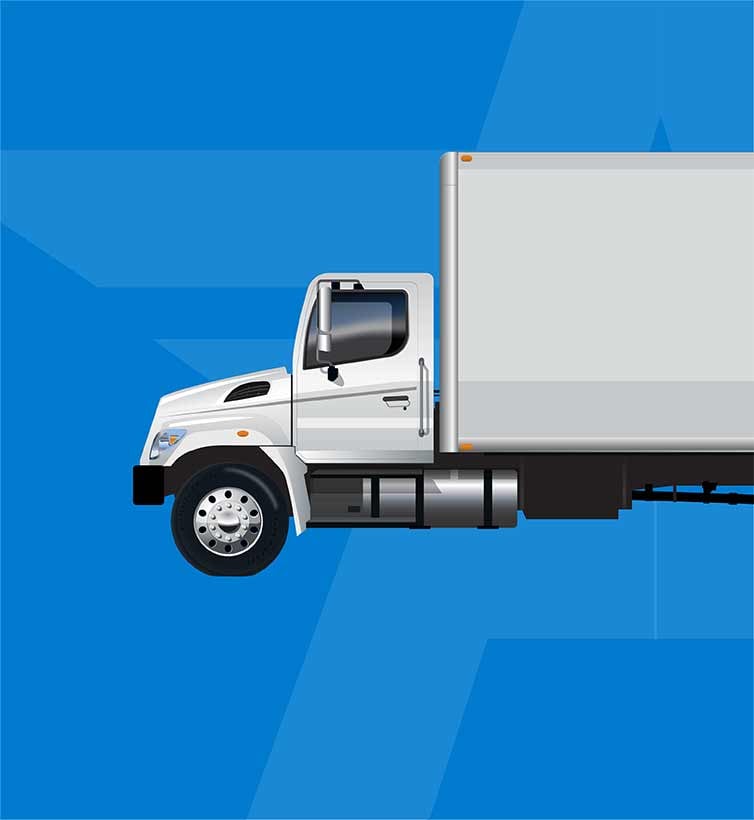
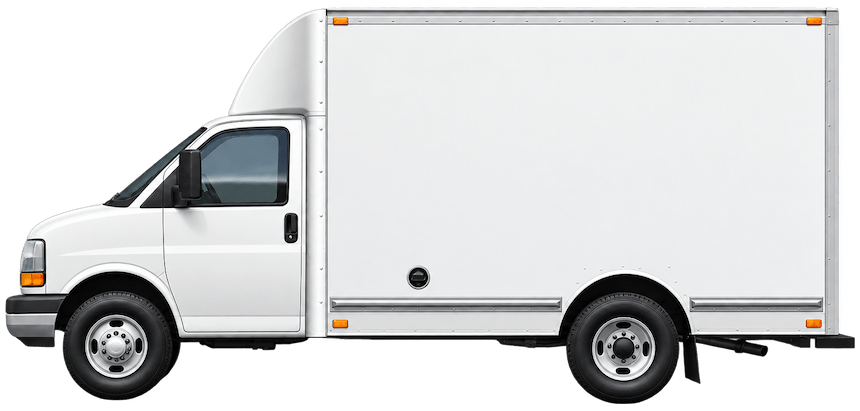
A box truck – also known as a small straight truck or cube van – is a mid-sized cargo vehicle with an enclosed, cube-shaped freight compartment. Typically ranging from 10 to 16 feet in length (not including the cab) and about 96 inches wide, these trucks are larger than Sprinter cargo vans but smaller than full-sized semi-trailers.

This “just right” size gives box trucks the maneuverability to navigate city streets and tight job sites, while offering significantly more cargo space and weight capacity than a standard van. Their unibody straight-truck design (cab and cargo box on one frame) makes them ideal for expedited ground shipping – they can carry substantial loads without requiring the complex hookup of a tractor-trailer.

For shippers, choosing the right vehicle for expedited ground transport is critical – and that’s where HotShotTrucking.com comes in. HotShotTrucking.com is a leading provider of urgent freight solutions with a nationwide network of vehicles and drivers. From nimble Sprinter vans and small box trucks to 53-foot dry vans and full flatbed trucks, HotShotTrucking.com finds the right vehicle to match each shipment’s size and deadline.

Box trucks (small straight trucks) are often ideal for medium-sized loads, providing the perfect middle ground when a Sprinter van is too small but a 53′ trailer would be impractical. Each shipment we handle travels via its own dedicated truck, meaning no unnecessary stops or cargo transfers – a huge advantage when you're up against a deadline.

Request a Quote Now

Add your shipment details below, and one of our professional expeditors will contact you within minutes. For immediate assistance on an urgent quote, call (800) 604-2511 with these details handy.

icon-box-truck-2

Our expedited ground network operates around the clock across the U.S., Canada, and Mexico, ready to dispatch a truck at any time.

highway-1

Dedicated door-to-door service – your freight is the only cargo on the truck, with no intermediate stops or transfers.

gear

Equipment ranges from sprinter vans and box trucks up to 53′ dry van trailers, handling loads from a single pallet to a full truckload.

economy

Real-time GPS tracking and a single point of contact keep you constantly updated on your shipment’s progress.

HotShotTrucking.com: Urgent Ground Shipping and Dedicated Trucking Solutions.

KEY BENEFITS

NATIONWIDE NETWORK
SINGLE POINT OF CONTACT
DEDICATED EXPERTISE
REAL-TIME TRACKING

Take advantage of our vast nationwide network of shippers.

HotShotTrucking.com provides the same outstanding performance, coordinated logistics, tracking and customer service for its small box truck options as it does for all of its ground and air cargo services. We have an integrated network of air and ground shipping options to give you the widest range of choices without having to call around for multiple quotes.

EXPLORE OUR COVERAGE

hst-coverage-Aug-19-2025-12-52-46-8636-PM
Expedited Ground Services

Box Truck Advantages

Box trucks play an important role in expedited ground transportation, offering the ideal balance of size, speed, and versatility. Their unique design allows them to handle larger loads than vans while remaining more agile and cost-efficient than full tractor-trailers. For businesses that rely on time-sensitive deliveries, box trucks provide a dependable solution that keeps shipments moving smoothly and on schedule.
icon-box-truck-2

Types of Box Trucks

There are several types of popular box trucks on the road today, including models built by Isuzu, Hino, Mitsubishi, Freightliner, and Chevrolet. This class of vehicles is extremely adaptable and has many advantages compared to Sprinter vans, larger straight trucks, and semi-trailers.

These can also be fitted with refrigerators and freezers to haul temperature-sensitive freight, much like Sprinter vans, or left completely empty for maximum volume. As a top-flight third-party logistics provider (3PL), the experienced expeditors at HotShotTrucking.com know precisely when an expedited small box truck is the best option for your next time-sensitive shipment – or not.

3pl

Box Trucks Stats

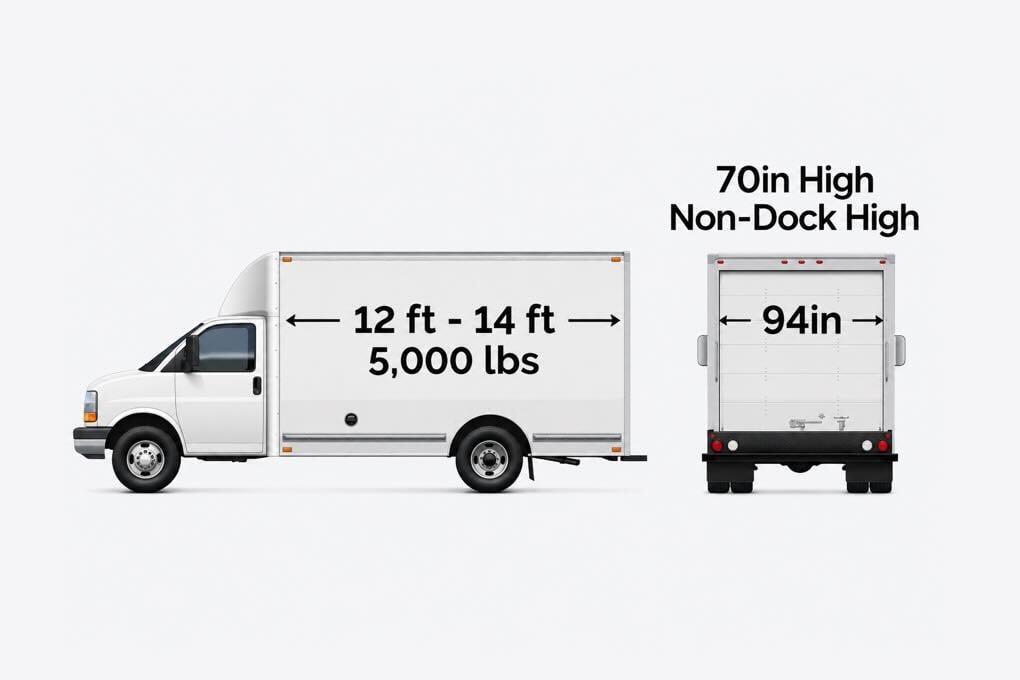
Small box trucks range from 10 to 16 feet long (not including the cab) and are 96 inches wide. This makes them larger than Sprinter vans but smaller than large box trucks and semi-trailers. Most types have a standard rear roll up door, but some might have hinged doors, built-in ramps or lift-gates, and some models have additional side doors to access the cargo area.

Box trucks are easily recognized by their cube-shaped body style. Small box trucks are unibody vehicles, which means that all the vehicle parts are attached to a single frame. A box truck typically has a separate freight compartment that is divided from the front cab where the driver sits, although some do have an access door between the two compartments.

gear

Cab Characteristics

There are two primary types of box trucks, with the main differentiator being where the engine is located. Why this matters is that one type does have certain advantages over the other in specific environments, and this is where the deep experience of HotShotTrucking.com will help in making the decision of whether to use one type or the other. The two main box truck types include:

Conventional box trucks have a traditional truck design, with the engine located in front of the steering wheel with the usual hood or “nose”.

Cabover, a newer style of truck design, do not have a traditional hood, or “nose”, with the engine located beneath the front seats. These flat-nosed trucks are increasing in popularity in certain parts of the U.S. because of their ability to easily navigate through busy residential and commercial areas.

Truck Packaging

Significant Cargo Capacity in a Compact Vehicle

As a larger vehicle, small box trucks can simply carry more than a Sprinter van. The typical small straight truck has a load capacity of up to 9,000 pounds (although this can vary between models). Standard small box truck lengths include 10, 12, 14, and 16 feet cargo areas that range from six to eight feet high. This provides an incredible amount of shipping space in a relatively compact area that is still greater than what a Sprinter van can provide.

For example, a 16-foot box truck is 192 inches long. At 48 inches in length per pallet, you can easily fit two parallel rows of four inside the cargo box, for a total of 8 pallets, single-stacked. If you double-stack, you can fit 16 pallets in a 16′ small box truck – which is safe if you do not exceed the vehicle’s carrying capacity and properly secure the load.

Small box trucks do not reach standard loading dock heights, which can impact when and where a small box truck should be used. However, the side doors on some models can also make accessing and unloading freight easier. HotShotTrucking.com ensures all of these details are taken into consideration when deciding if a small box truck is right for your shipment.

icon-package

Rapid, Direct Shipments (No Transfer Delays)

Box trucks enable fast, point-to-point delivery. Expedited box truck services operate on a dedicated basis – your freight is the only cargo on the truck, and it goes straight from pickup to drop-off with no interim terminals or cross-docking. Skipping the typical hub-and-spoke distribution network cuts out the delays of unloading and reloading at warehouses or sorting facilities. It also reduces the risk of damage or misrouting. Instead, a single driver (or team of drivers) stays with your shipment from start to finish.

As soon as your goods are loaded, the truck hits the road and heads directly for the destination, often arriving hours (or even days) faster than standard LTL or multi-stop routes. HotShotTrucking.com specializes in these dedicated trucking solutions that move urgent freight directly with no delays or transfers. The result is a dramatic improvement in transit times – industry research shows 24/7 expedited operations with GPS tracking can reduce average delivery times by over 20%. For you, that means critical shipments arrive when you need them, not a moment later.

Location

Maneuverability and Urban Accessibility

Another big advantage of box trucks is their ease of maneuvering in tight spaces. Small straight trucks are typically much shorter and more agile than 53′ tractor-trailers, which allows them to navigate city streets, narrow roads, and job sites that would challenge a big rig. Many box trucks use a cabover design (with no long engine hood), giving them a tighter turning radius and excellent driver visibility. This makes them ideal for residential deliveries, busy downtown areas, low-clearance alleys, and other environments where space is limited.

A box truck can get closer to your actual delivery location, often even right up to a loading dock or storefront, whereas a semi might have to park further away due to size restrictions. The ability to “go where the big trucks can’t” means faster last-mile delivery and less need for secondary handling. Whether it’s weaving through crowded industrial districts or backing into a small warehouse lot, box trucks offer the versatility of a delivery truck with the capacity of a freight truck – a perfect combination for expedited urban logistics.

Oil and Gas-1

Better Fuel Efficiency & Cost Savings

Smaller trucks generally consume less fuel than their larger 18-wheeler counterparts, which can translate to lower operating costs and eco-friendlier performance. A fully loaded box truck usually achieves better miles-per-gallon than a fully loaded tractor-trailer, especially on shorter routes. This improved fuel efficiency not only reduces greenhouse emissions but also helps keep expedited shipping costs in check. In many cases, one box truck making a single direct run will use considerably less fuel than multiple Sprinter vans would for the same tonnage, and far less than an entire semi-truck running half-empty. Additionally, box trucks often face lower tolls and fewer regulatory fees than big rigs, adding to their cost advantages.

Energy Production icon

Enclosed, Secure Transportation

Unlike flatbed trailers or open pickup-truck haulers, box trucks provide a fully enclosed, weatherproof cargo area. Freight travels inside a locked, secure box protected from rain, wind, and road debris – as well as from theft or prying eyes. This is a major advantage when you’re shipping sensitive or valuable goods via hot shot delivery. The sturdy walls of the truck body and typically lockable roll-up rear door keep the load secure during transit and any brief stops. Additionally, because expedited box truck shipments are dedicated (not shared with other shippers), there are fewer touchpoints where cargo could be mishandled or misplaced. The freight isn’t being repeatedly loaded and unloaded at depots; it stays sealed in the truck until it reaches you.

Partnership

Cost-Effective for Mid-Sized Urgent Loads

Box trucks often hit the sweet spot financially for certain shipment sizes. If your load is too large for a van but nowhere near filling a 53′ trailer, booking a box truck can be far more cost-effective than paying for a mostly-empty full truckload. You’re essentially right-sizing the transport to your freight. Companies avoid the expense of hiring a big rig (with its higher fuel and driver costs) when a smaller truck can do the job more efficiently. At the same time, using a box truck for a dedicated rush shipment can save money compared to alternatives like air freight or overnight parcel services, especially over medium distances. Expedited ground transport is generally more affordable than air shipping for domestic routes under a few hundred miles, and it avoids the size and weight limitations that air cargo might have.

Industries That Use Box Trucks

oil-gas-1

Oil & Gas

Oil and gas firms use expedited box trucks to ship valves, tools, and materials on a same-day basis, preventing costly downtime when a well or pipeline repair is urgent. These trucks can navigate out to remote pump jacks or rigs quickly, ensuring continuous production in an industry where time literally equals money.

LEARN MORE

data center

Technology

In the fast-paced technology industry, meeting product launch dates and service appointments is critical, and box trucks help make it happen by providing express ground transport for hardware when flying isn’t practical or available. Expedited freight via box truck allows technology firms to ship this equipment securely and swiftly.
LEARN MORE

manufacturing-1

Automotive

The automotive industry runs on just-in-time supply chains, which means a delayed part can shut down an assembly line. When a production line is stalled due to a missing component, every hour of downtime is costly. We’ve rushed tiny but essential electronics, engine components, and tooling equipment directly to factories.

Learn More

construction-1

Construction

Construction projects run on tight timelines, and a missing component can idle an entire crew. Expedited freight services help construction companies get building materials, tools, or machine parts to job sites at a moment’s notice. Box trucks can swiftly deliver everything from pallets of cement or lumber to specialized equipment like pumps or generators.

LEARN MORE

retail

Manufacturing

Whether it’s a replacement machine part for an assembly line or an emergency batch of raw material, a dedicated straight truck can fetch it from a supplier and bring it straight to the plant the same day or by next morning. Manufacturers across automotive, electronics, and other sectors use hot shot trucking to avoid costly line stoppages and keep their lean production schedules on track.

LEARN MORE

aerospace

Aerospace & Defense

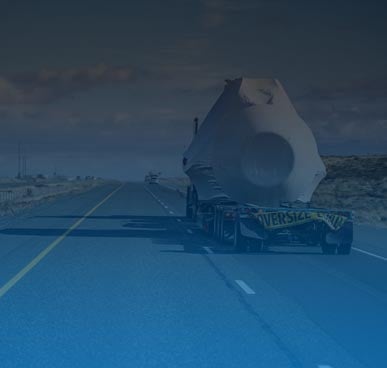
Box trucks can carry large, heavy crates of aerospace parts or sensitive electronics with dedicated speed and care. When an aircraft is grounded (AOG) waiting for a part, or a defense contractor needs a prototype shipped immediately for testing, expedited ground services (often in tandem with air freight) ensure these high-priority shipments reach their destination without fail.
LEARN MORE

Machinery

Machinery

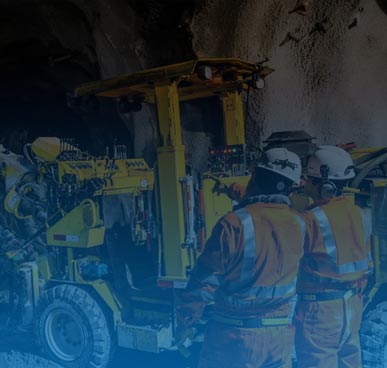
Manufacturers and distributors of heavy machinery rely on box trucks to transport critical replacement parts, tools, and components quickly to factories or job sites. Their enclosed design ensures sensitive equipment is protected during transit while still delivering the speed needed to keep production lines and service operations running smoothly.
LEARN MORE

Mining

Mining

Mining operations often require urgent deliveries of parts, tools, and safety supplies to remote locations. Box trucks provide the right balance of payload capacity and maneuverability for this type of freight job, allowing expedited transport of mid-sized but essential equipment to minimize costly downtime in the field.

LEARN MORE

Telecommunications

Telecommunications

Telecom companies use box trucks to expedite shipments of cabling, network hardware, and repair equipment to urban hubs or rural installations. Their secure, enclosed cargo areas safeguard sensitive electronics, while the trucks’ agility makes them ideal for reaching data centers, cell towers, and service sites on tight schedules.

LEARN MORE

Ground Transportation and Expedited Trucking Services

Our team of professionals works tirelessly behind the scenes to ensure every shipment arrives on time, and in optimal condition, at its final destination.
We offer the fastest ground and air transportation options for B2B customers across the United States, Mexico, and Canada.
We’re with you along every mile of your journey. Get peace of mind with a dedicated single point of contact.

Explore Our Resource and Blog Section

HotShotTrucking.com is a trusted authority in the expedited freight industry, recognized for our reliability and operational efficiency. Access industry insights, expert advice, and resources to enhance your logistics strategies and maintain optimal operational flow.

thumb-data-center
Blog

Hot Shot Trucking and the Stargate AI Data Center in Abilene, Texas

The Stargate data center project in Abilene, Texas is nothing short of historic. Announced in early 2025 by a joint venture of OpenAI, SoftBank, and Oracle, the project aims to invest up to $500 billion in U.S. artificial intelligence infrastructure and was touted to create over 100,000 jobs nationwide.

blog-space-command
Blog

Space Command Huntsville: The Role of Expedited Freight

The decision to base the U.S. Space Command headquarters in Huntsville, Alabama – known as “Rocket City” – marks a pivotal moment for both national defense and the local economy.

abilene7
Blog

What is Hot Shot Trucking?

Hot shot trucking is a specialized freight service focused on speed, flexibility, and delivering time-critical hot shot loads. Hot shot trucking services involves hauling smaller, urgent shipments on short notice and delivering them directly to their destination as fast as possible.

houston-thumbnail
Blog

Houston Hot Shot Delivery

Houston’s position as a national energy hub means urgent shipping needs are commonplace. When a critical piece of equipment fails in an oilfield or at a refinery, hot shot delivery services become a supply-chain lifeline for the Houston economy.

blog-oil-and-gas
Blog

Hot Shot Trucking for the Oil Industry

Hot shot trucking originated in the oil and gas industry. It was a response to the need for rapid transport of time-sensitive materials to remote drilling sites. Today, it plays a critical role in the logistics of the oil and gas sector.

blog-what-is-full-truckload
Resource tag

Understanding Full Truckload Services (FTL)

Full Truckload (FTL) services have solidified their place as a vital shipping solution for expedited freight. With the trucking industry powering over 70% of the nation’s freight, FTL stands out as a key service that helps to ensure supply chains operate seamlessly.

Streamlined Communication with a Single Point of Contact

Successful expedited shipping isn’t just about the trucks – it’s also about communication. At HotShotTrucking.com, we prioritize clear and consistent coordination with our clients and drivers, ensuring you have all the information you need from start to finish. To streamline the process, HotShotTrucking.com provides a single point of contact (SPOC) for each customer.

This means from the moment you place your order until your freight is delivered, you work with the same dedicated expeditor managing your shipment. No more getting bounced around call centers or having to explain your situation to multiple agents – you have one direct line to the team handling your delivery.

Steve Jansen headshot

Hi, I'm Steve

Reach out today and let's solve your urgent shipping needs. I or a member of the team will be with you from start to finish.

Let's chat

Map of the United States

Wherever You Need Us, You'll Find Us

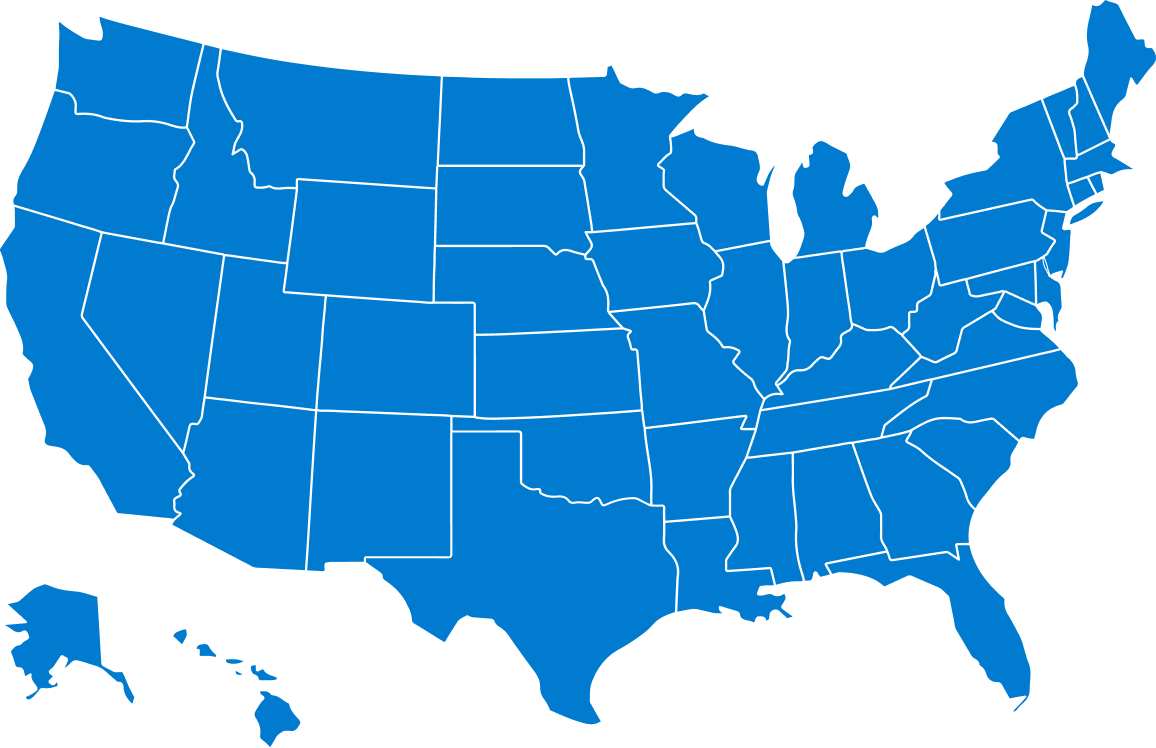
We're proud to serve customers across the United States with custom shipping solutions designed to meet urgent needs. Browse by state to view services in your area.

AREAS WE SERVICE

Alabama

(205) 453-1955

Alabama Alabama

Centered around Birmingham, Huntsville, and Mobile, Alabama is known for aerospace, automotive, and advanced manufacturing. Its competitive business climate and skilled workforce support efficient operations and long-term investment.

Learn More

Alaska Alaska

Alaska’s location supports time-sensitive shipments for oil, fishing, and remote resource development. We offer custom shipping and delivery access through Anchorage, Fairbanks, and coastal hubs.

Learn More

Arizona

(623) 252-0101

Arizona Arizona

Phoenix, Tucson, and Mesa anchor Arizona’s expanding economy, with strengths in technology, aerospace, and clean energy. A business-friendly environment and consistent population growth attract a range of enterprises.

Learn More

Arkansas

(314) 269-1222

Arkansas Arkansas

Little Rock and Fayetteville support Arkansas’s economy, known for its concentration in retail, agriculture, and transportation. The state’s central location and affordable business costs appeal to companies serving national markets.

Learn More

California

(323) 648-3500

California California

Explore time-critical shipping coverage across Los Angeles, San Francisco, San Diego, and the Central Valley. California leads the nation in technology, entertainment, agriculture, and global trade connections.

Learn More

Colorado

(720) 262-8998

Colorado Colorado

Denver, Boulder, and Colorado Springs contribute to Colorado’s strengths in aerospace, software development, and outdoor recreation. A well-educated population and strong quality of life continue to draw new businesses.

Learn More

Connecticut

(203) 936-6655

Connecticut Connecticut

Explore reliable delivery services for finance, insurance, and biotech sectors in Hartford, Stamford, and New Haven. Connecticut’s position between New York and Boston provides direct access to Northeast economic hubs.

Learn More

Delaware

(302) 504-6044

Delaware Delaware

Wilmington leads Delaware’s activity in finance, pharmaceuticals, and corporate services. Its streamlined incorporation process and favorable legal framework attract many national and international businesses.

Learn More

District of Columbia

(202) 644-8833

dc state icon District of Columbia

Located in the heart of the nation's capital, our Washington, D.C. hub specializes in urgent and highly sensitive shipments. We provide rapid delivery for government contractors and professional services firms, ensuring your cargo arrives securely and on time in this critical market.

Learn More

Florida

(786) 231-6700

Florida Florida

Florida’s major metros, Miami, Orlando, and Tampa, support thriving sectors like tourism, aerospace, and international trade. The state’s coastal access and tax-friendly policies are major draws for businesses of all sizes.

Learn More

Georgia

(678) 288-5005

Georgia Georgia

With Atlanta, Savannah, and Augusta as key centers, Georgia is recognized for its contributions to film, manufacturing, and transportation. A well-connected infrastructure and growing tech scene make it a strong option for expansion.

Learn More

Hawai Hawaii

Honolulu anchors Hawaii’s economy, which includes tourism, defense, and sustainable agriculture. Its location in the Pacific enables unique access to Asian markets and renewable energy development.

Learn More

Idaho Idaho

Boise, Twin Falls, and Idaho Falls are central to Idaho’s growing sectors in agriculture, food processing, and tech. A low cost of living and supportive business policies encourage entrepreneurship and relocation.

Learn More

Illinois

(773) 966-2800

Illinois Illinois

Statewide shipping access, from Chicago to Springfield, supports manufacturing, agriculture, and related operations. Illinois offers a large talent base and strong connections to both national and global markets.

Learn More

Indiana

(317) 800-7222

Indiana Indiana

Indianapolis, Fort Wayne, and Evansville contribute to Indiana’s manufacturing, life sciences, and agriculture industries. A central U.S. location and stable regulatory environment support long-term business growth.

Learn More

Iowa Iowa

Explore reliable shipping and delivery services in Des Moines, Cedar Rapids, and Davenport for agricultural products, insurance documents, and machinery. Iowa combines rural productivity with strong financial and tech sectors.

Learn More

Kansas Kansas

Kansas City, Wichita, and Topeka anchor Kansas’s industries in aviation, bioscience, and renewable energy. Low operational costs and a central geographic position benefit businesses with national reach.

Learn More

Kentucky

(502) 230-4444

Kentucky Kentucky

Learn about custom delivery support for bourbon, healthcare products, and auto parts in Louisville, Lexington, and Bowling Green. Kentucky’s distribution networks and manufacturing legacy make it ideal for time-sensitive shipping.

Learn More

Louisiana

(504) 613-6666

Louisiana Louisiana

New Orleans, Baton Rouge, and Shreveport shape Louisiana’s focus on energy, shipping, and chemical production. Its access to the Gulf of Mexico and established port infrastructure offer critical trade advantages.

Learn More

Maine Maine

Serving Portland, Bangor, and Augusta, we offer delivery options for marine products, healthcare, and specialty goods. Maine offers natural access to Canadian and Atlantic markets along with a strong quality-of-life appeal.

Learn More

Maryland

(800) 604-2511

Maryland Maryland

Baltimore, Bethesda, and Frederick contribute to Maryland’s strengths in cybersecurity, biotech, and defense. Its proximity to federal agencies and top research institutions supports innovation and investment.

Learn More

Massachusetts

(617) 934-7800

Massachusetts Massachusetts

Supporting urgent deliveries in Boston, Cambridge, and Worcester, we ship pharmaceuticals, higher education, and R&D-driven goods. Massachusetts offers access to top-tier universities and leading-edge innovation hubs.

Learn More

Michigan

(313) 887-0577

Michigan Michigan

Detroit, Grand Rapids, and Ann Arbor form the backbone of Michigan’s automotive, mobility, and manufacturing sectors. A deep talent pool and commitment to innovation attract investment in advanced industries.

Learn More

Minnesota

(763) 273-5444

Minnesota Minnesota

Explore custom delivery services for medical devices, retail, and food manufacturing across Minneapolis, St. Paul, and Rochester. Minnesota combines innovation with a strong corporate presence and a skilled labor force.

Learn More

Mississippi

(769) 553-4413

Mississippi Mississippi

Jackson, Gulfport, and Hattiesburg support industries like shipbuilding, agriculture, and manufacturing. Mississippi offers affordable business conditions and strategic access to southern U.S. markets.

Learn More

Missouri

(314) 269-1222

Missouri Missouri

Learn about shipping support across St. Louis, Kansas City, and Springfield for food processing, healthcare products, and life sciences. Missouri’s location and infrastructure support regional delivery and national service coverage.

Learn More

Montana

(800) 604-2511

Montana Montana

Billings, Missoula, and Bozeman are central to Montana’s economy, which includes energy, agriculture, and tourism. The state offers wide open space, natural resources, and room for innovative rural development.

Learn More

Nebraska

(402) 909-0200

Nebraska Nebraska

Omaha, Lincoln, and Grand Island support Nebraska’s activity in finance, agriculture, and manufacturing. Its central location and skilled labor force provide dependable conditions for growth.

Learn More

Nevada Nevada

Las Vegas, Reno, and Henderson shape Nevada’s economy in hospitality, mining, and clean energy. The state’s tax structure and rapid population growth contribute to ongoing economic momentum.

Learn More

New Hampshire

(603) 782-0333

New Hampshire New Hampshire

Manchester, Nashua, and Concord are economic hubs in New Hampshire, supporting healthcare, manufacturing, and tech. The state combines access to Boston markets with a lower tax burden.

Learn More

New Jersey

(862) 236-3116

New Jersey New Jersey

Newark, Jersey City, and Princeton support New Jersey’s diverse economy in pharmaceuticals, finance, and logistics. Its proximity to major East Coast metros and deep talent base attract both startups and global firms.

Learn More

New Mexico

(505) 886-0622

New Mexico New Mexico

New Mexico’s key cities, including Albuquerque, Santa Fe, and Las Cruces, help drive energy, aerospace, and scientific research. The state’s open land and national labs support innovation in advanced industries.

Learn More

New York

(347) 514-9999

New York New York

New York City, Buffalo, and Albany shape a broad economy in finance, media, and health sciences. With access to global markets and deep institutional resources, New York is a leader in commerce and innovation.

Learn More

North Carolina

(919) 800-0339

North Carolina North Carolina

Charlotte, Raleigh, and Durham contribute to North Carolina’s leadership in banking, biotech, and manufacturing. A growing talent pool and strong research universities attract long-term investment.

Learn More

North Dakota

(701) 212-1922

North Dakota North Dakota

North Dakota’s energy, agriculture, and technology sectors are supported by the state's metro areas, including Fargo, Bismarck, and Grand Forks. Low unemployment and stable growth create a welcoming climate for business development.

Learn More

Ohio Ohio

Covering major cities like Columbus, Cleveland, and Cincinnati with tailored shipping solutions and reliable delivery networks. Ohio offers central access to the Midwest with leading industries in healthcare, manufacturing, and finance.

Oklahoma

(405) 445-7505

Oklahoma Oklahoma

Providing custom shipping options throughout Portland, Eugene, and Salem, we deliver advanced tech and sustainable goods. Oregon's economy thrives on innovation in technology, clean energy, and advanced manufacturing.

Learn More

Oregon

Oregon

With Portland at the forefront, Oregon has built a reputation for innovation in green energy, advanced manufacturing, and software. Its commitment to sustainability and quality of life draws both startups and global brands.

Pennsylvania

(215) 989-4444

Pennsylvania Pennsylvania

Supporting urgent deliveries and time-critical shipments includes cities such as Philadelphia, Pittsburgh, and Harrisburg. Pennsylvania connects East Coast markets with strengths in education, healthcare, and industrial manufacturing.

Learn More

Rhode Island

(800) 604-2511

Rhode Island Rhode Island

Fast, flexible shipping supports marine products, healthcare, and design goods in Providence, Warwick, and Newport. Rhode Island’s coastal access and dense regional network support creative and technical industries.

Learn More

South Carolina

(803) 403-9055

South Carolina South Carolina

Custom shipping and delivery supports auto parts, aerospace components, and industrial goods in Charleston, Columbia, and Greenville. The state is known for its growing role in advanced manufacturing and exports.

Learn More

South Dakota

(701) 212-1922

South Dakota South Dakota

Reliable delivery services operate in Sioux Falls, Rapid City, and beyond for agriculture, finance, and light manufacturing. South Dakota attracts business with no corporate income tax and a stable economic environment.

Tennessee

(615) 970-7100

Tennessee Tennessee

Time-critical shipping solutions serve Nashville, Memphis, and Knoxville for healthcare, automotive, and music-related goods. Tennessee offers access to key Southern markets with strong infrastructure and workforce programs.

Learn More

Texas Texas

Custom shipping solutions for construction, manufacturing, oil & gas, and more support major cities, including Dallas and Austin. Enjoy Texas’ business-friendly climate, no state income tax, and prime location.

Learn More

Utah Utah

Salt Lake City, Provo, and Ogden handle urgent shipments for the tech, finance, and recreation industries. Utah combines rapid economic growth with a skilled, youthful workforce and a strong startup culture.

Learn More

Vermont

(800) 604-2511

Vermont Vermont

Burlington and the surrounding areas support efficient delivery services for specialty foods, renewable energy systems, and small-scale manufacturing. Vermont promotes sustainability, community-based business, and green innovation.

Learn More

Virginia

(804) 886-3100

Virginia Virginia

Richmond, Virginia Beach, and Arlington offer streamlined shipping and delivery access for defense, cybersecurity, and maritime goods. Virginia’s proximity to D.C. and educated workforce support both public and private sector growth.

Learn More

Washington

(206) 673-2900

Washington Washington

Seattle, Tacoma, and Spokane provide fast delivery and custom shipping for aerospace parts, tech products, and agricultural exports. Washington combines West Coast market access with a deep culture of innovation.

Learn More

West Virginia

(804) 886-3100

West Virginia West Virginia

Charleston, Morgantown, and Huntington offer shipping options for energy, chemical, and forestry-related goods. West Virginia’s natural resources and infrastructure investments support long-term business activity.

Learn More

Wisconsin

(414) 973-8000

Wisconsin

Milwaukee, Madison, and Green Bay offer statewide shipping solutions for dairy, heavy equipment, and medical products. Wisconsin is known for its industrial strength and commitment to workforce development.

Learn More

Wyoming

(800) 604-2511

Wyoming Wyoming

Cheyenne, Casper, and surrounding regions provide custom shipping support for energy and natural resource projects. Wyoming offers tax advantages and wide-open space for growing operations in mining, ranching, and energy.

Learn More

The Right Capacity Is Key to Every Urgent Shipment

Your urgent shipment will be the only freight in the sprinter van, box truck, straight truck, hot shot truck, 53’ dry van, or full flatbed to minimize damage and ensure the shipment goes direct from pickup to delivery.

Frequently Asked Questions

What is a box truck and how is it different from other trucks?

A box truck is a type of straight truck with a cab and an enclosed, box-shaped cargo area on one single frame. Unlike a semi-truck (tractor-trailer) which has a separate cab and detachable trailer, a box truck’s cargo container is permanently attached to the chassis. Box trucks are sometimes called cube vans or straight trucks. They typically range from about 10 to 26 feet long; common small box trucks are 12–16 feet long. In terms of appearance, they’re easy to recognize by the rectangular “box” sitting on the back of the truck. The driver’s cabin is separated from the cargo area (often there’s a wall between them, though some box trucks have a door connecting the two).

In comparison to other trucks, a box truck falls in between a full-size semi and a light-duty pickup or van. For example, a 53′ semi-trailer is much larger and can haul significantly more weight, but requires a tractor to tow it and is less maneuverable in small areas. A Sprinter or cargo van is smaller than a box truck and easier to drive in tight spaces, but carries far less freight. Box trucks hit the sweet spot – they have more capacity than a van yet can access places a big rig cannot. Also, because box trucks are straight trucks (one unit), they don’t require the coupling/uncoupling that trailers do and are generally quicker to deploy for local and regional deliveries. In summary, a box truck is an enclosed medium-duty truck that offers a combination of cargo space and agility, making it distinct from both larger tractor-trailers and smaller delivery vans.

Is a box truck the same as a straight truck?

Yes – in most cases, the terms “box truck” and “straight truck” refer to the same kind of vehicle. “Straight truck” is a technical term describing any truck where the axles are attached to a single frame (in other words, the cab and cargo box are one unit). A box truck is a common type of straight truck that has an enclosed, box-shaped cargo area. Essentially, all box trucks are straight trucks, but not all straight trucks are box trucks (for example, a dump truck or a beverage truck with side bays could be considered a straight truck too).

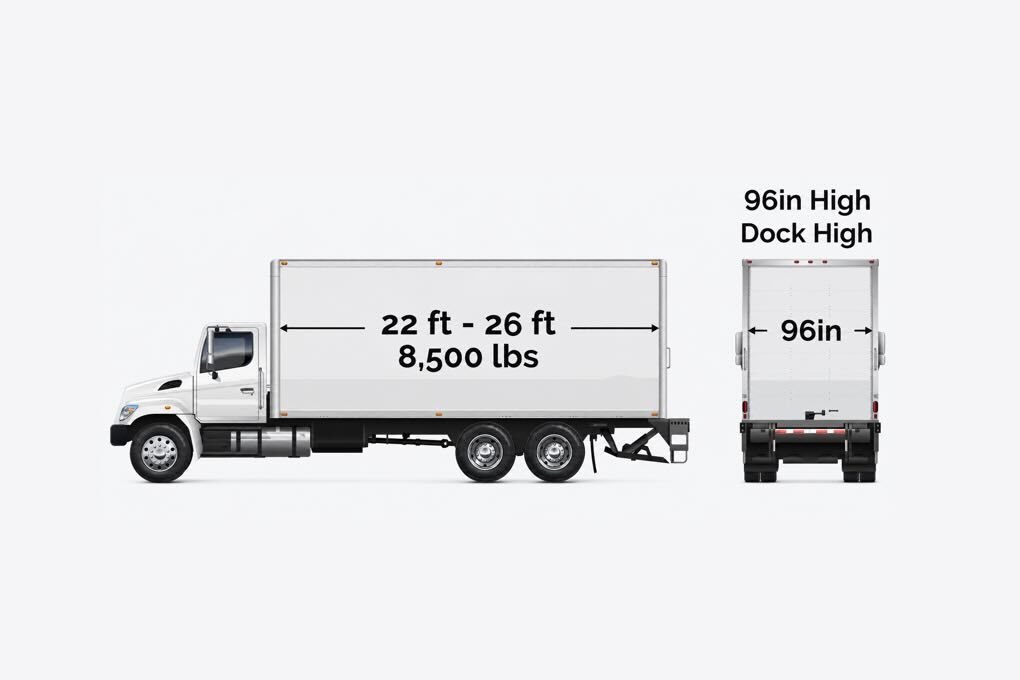
In everyday use, people often use straight truck, box truck, and even cube van interchangeably when talking about medium-duty trucks used for freight. You might hear trucking professionals say “send a straight truck for that load” – which typically implies a box truck will be used. There’s no difference in the chassis; it’s mostly about the cargo area type. One minor nuance: the phrase “straight truck” can also encompass larger 22–26 ft trucks (sometimes called large straight trucks) which have the same straight-frame design. These bigger straight trucks are still box trucks if they have an enclosed body. So whether you say straight truck or box truck, you’re generally describing the same vehicle class – a mid-sized truck with a fixed cargo body – just emphasizing a different aspect (the frame design vs. the shape of the cargo area). For practical purposes in expedited freight, box truck = small straight truck in the 10–26 foot range used for dedicated deliveries.

How long is a typical box truck and what are its dimensions?

Common small box trucks used in expedited delivery are often 10, 12, 14, or 16 feet in length (cargo box length). These trucks are usually about 7.5–8 feet wide (roughly 94–96 inches) and around 8 feet tall externally. For example, a 12-ft box truck might have internal cargo dimensions on the order of 12’L x 6–7’W x 6–7’H, giving around 400–500 cubic feet of space. A 16-foot box truck, one of the larger “small” straight trucks, has a cargo area 16’ long and roughly 7–8’ high and wide, providing significantly more volume. According to HotShotTrucking’s specs, small box trucks range from 10–16 feet long and 96 inches wide, with interior heights often between 6 and 8 feet.

Beyond the small trucks, there are also large box/straight trucks that are typically 22, 24, or 26 feet in length. A 26-foot box truck (common for moving trucks or large deliveries) might measure 26’L x 8’W x 8’H in the cargo area. These larger straight trucks have much more capacity and approach the size of a single-unit U-Haul or rental truck you might see for moving houses. They still are not as long as a tractor-trailer (53’ trailer), but at ~26 feet they require more room to maneuver than a 16-footer. To put it in perspective, a 16-ft truck is about the length of two cars, whereas a 26-ft truck is about three to four cars long. The shorter length of small box trucks gives them a tighter turning radius and easier handling. But regardless of size, all box trucks have a rectangular footprint and are built to standard width (~8 feet) to fit on roads. Always remember that the listed length usually refers to the cargo box only, not counting the engine cab – the total vehicle length will be a few feet longer because of the cab and bumper.

How much weight can a box truck carry?

The payload capacity of a box truck depends on its size and build. Small box trucks (in the 10–16 ft range) typically can carry on the order of 4,000 to 6,000 pounds of freight. HotShotTrucking.com notes that their 12–16’ box trucks can handle up to about 5,000 lbs safely. Larger straight trucks (22–26 ft long) have higher capacities – often around 9,000 to 10,000 pounds payload. For instance, a 26′ straight truck might carry roughly ~ 9,000 lbs of cargo, assuming it’s not volume-limited. These weight limits are governed by the truck’s Gross Vehicle Weight Rating (GVWR) and axle strength.

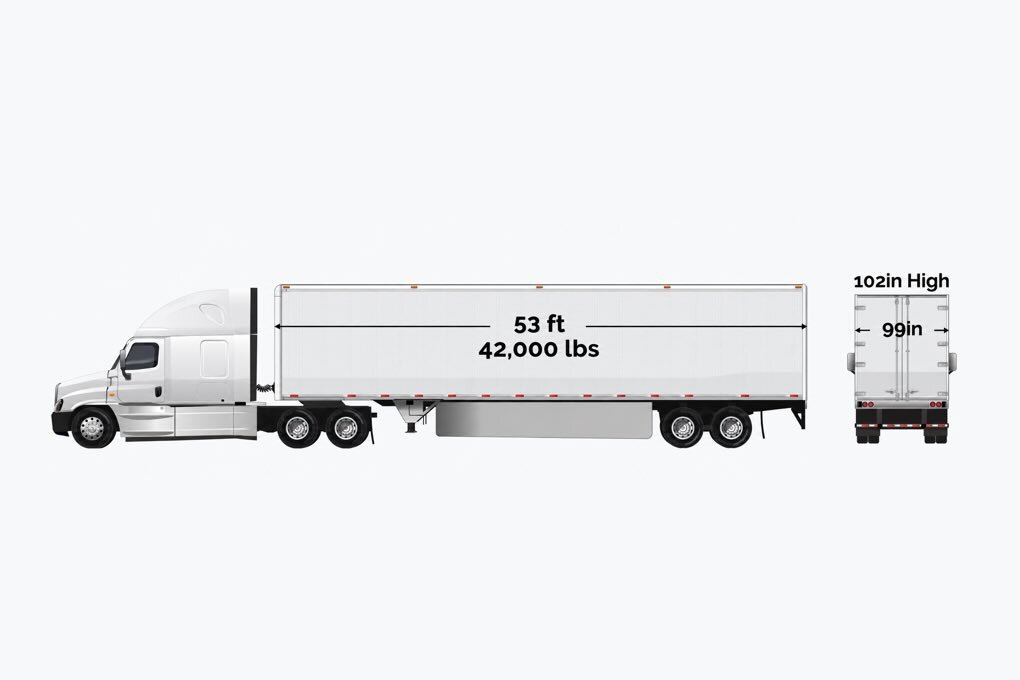
To compare, a Sprinter cargo van usually maxes out around 3,000 lbs of payload, and a full 53′ semi trailer can carry up to ~45,000 lbs of freight in a single load. So a box truck sits in the middle: it carries significantly more than a van, but much less than a tractor-trailer. For many expedited shipments, weight isn’t the only factor – volume (cubic space) or pallet count matters too. A small box truck might fit 6 to 8 standard pallets on the floor (single stacked), whereas a 26′ truck can hold 12–14 pallets. It’s important to note that you cannot always load to the maximum weight if the volume fills up first, and vice versa. Also, the legal weight limit without a special permit for most straight trucks is 26,000 lbs GVW (vehicle + cargo). So even if the truck’s physical capacity could allow more, it might be capped by regulations if the driver doesn’t have a CDL (see next question). In summary, most box trucks in expedited service carry 2–5 tons of cargo, depending on their size – plenty for mid-sized freight loads that need fast delivery.

How do Sprinter vans differ from box trucks in freight delivery?

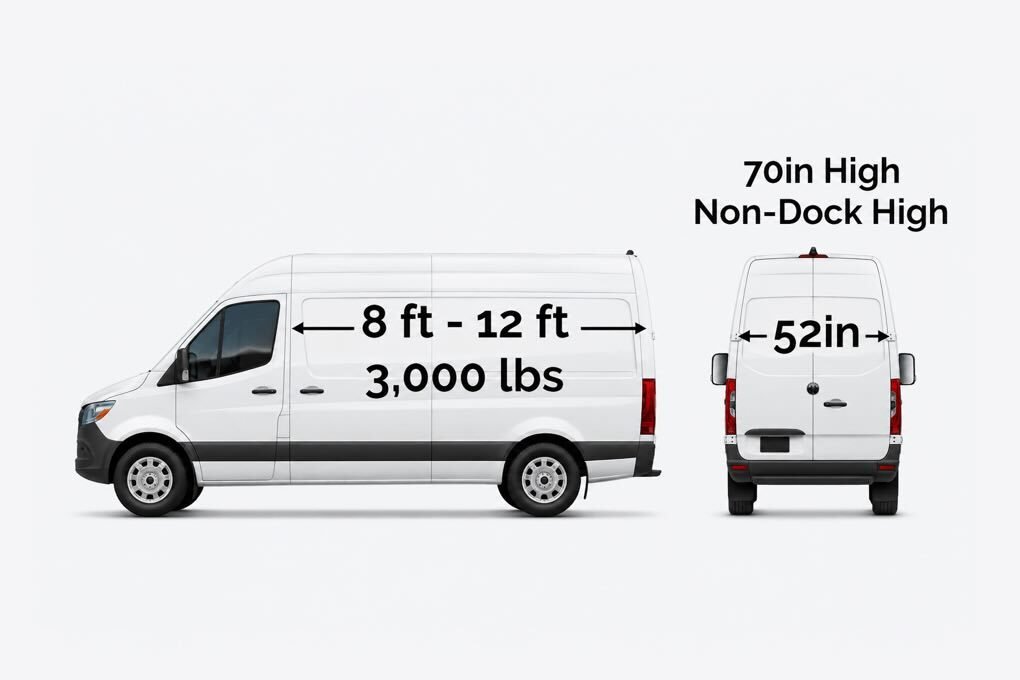
Sprinter vans (and similar cargo vans) are smaller than box trucks and serve slightly different niches in expedited delivery, although they overlap. A Sprinter van is typically 8 to 12 feet in cargo length, with a payload capacity around 2,500–3,500 lbs. It’s basically a large enclosed van that a single driver can easily operate. Sprinters are known for being fast and fuel-efficient. They can usually cruise at higher highway speeds than larger trucks and may not be required to stop at weigh stations, allowing for very quick point-to-point times. They’re excellent for urgent deliveries of a few pallets or smaller shipments — when speed is critical and the load is small, a Sprinter is often the most cost-effective and time-effective choice.

Box trucks, on the other hand, come into play when the shipment is a bit larger or heavier. Even a small 12–16′ box truck can carry roughly double the weight of a Sprinter van and more volume (tall freight or more pallets). So if you have, say, 5 pallets of goods or a 5,000 lb load, a box truck is appropriate whereas a Sprinter wouldn’t suffice. Box trucks are still relatively agile, but they are bulkier than vans – they might not zip through traffic quite as easily and could require more space for parking/unloading. Also, loading differs: Sprinter vans have a low floor and are often loaded from the back by hand or with a small ramp, while box trucks sit higher off the ground (some use liftgates or loading docks to get freight in and out).

In terms of delivery speed, for short distances, a Sprinter can sometimes be a bit faster simply because it’s smaller and possibly can take more nimble routes. However, box trucks keep up well and have the advantage of not having to leave freight behind. Another difference is driver regulations – Sprinter vans under 10,000 lbs GVW don’t fall under certain federal driver hour limits, meaning in some cases they can be operated continuously by one driver for longer periods (this can expedite transit for moderately long routes). Box trucks over 10k do have to follow commercial driving hours of service. In practice, though, expedited services plan around those rules by using team drivers or scheduling appropriately.

Are box trucks suitable for same-day or overnight deliveries?

Absolutely. Box trucks are frequently used for same-day, next-day, and overnight deliveries in the expedited freight world. Because of their size and capacity, box trucks often handle medium-distance routes that are too long for a quick local van courier, but still need to be completed within hours. For example, if you need a shipment picked up in one city and delivered to another city 300 miles away today, an expedited box truck can make that happen. The driver can load in the morning and drive straight through to deliver by afternoon or evening, well within a single day’s work.

For longer hauls, box trucks are also used in overnight runs. A solo driver can cover several hundred miles in a day; with expedited service, they might drive into the night to deliver first thing the next morning (respecting hours-of-service limits). If the distance is beyond what one driver can legally do in the time required, many carriers will use team drivers on a straight truck – two drivers alternating so that the truck rarely has to stop. This enables the box truck to essentially keep moving through the night and cover very long distances in well under 24 hours, mimicking the constant motion of a long-haul semi with a team.

The advantage of box trucks for these urgent deliveries is that they balance speed and capacity. They can travel on highways at normal truck speeds (often 60-70+ mph where allowed) and don't have to slow down as much as big rigs on curvy roads. They also can take shortcuts or secondary roads if needed to avoid traffic jams or road closures – something a big 18-wheeler might struggle with. Same-day freight within a 500-mile radius, for instance, is a common task for an expedited straight truck. Many businesses count on that overnight trucking capability to meet deadlines (e.g., a factory in Chicago might receive a part from Atlanta via an overnight straight truck). In summary, box trucks are not only suitable for same-day/overnight — they are one of the go-to options for it. As long as the shipment fits in the truck and the distance is within a realistic range, an expedited box truck delivery will be scheduled to ensure your freight arrives by the end of the day or by the next morning, as needed.

How can I schedule an expedited box truck shipment?

Scheduling an expedited shipment – whether it requires a box truck or any vehicle – is typically straightforward. First, choose a reliable expedited freight provider (such as HotShotTrucking.com) and contact them via phone or an online quote/request form. Hot shot and expediting companies usually have agents available 24/7 to assist with urgent requests. When you reach out, be prepared to provide key details about your shipment: the pickup location and timeframe, the delivery location and deadline, and the basic description of the freight (dimensions, weight, pallet count, commodity type, and any special requirements like refrigeration or fragile handling). With this information, the provider will determine the appropriate truck (e.g. box truck, sprinter van, etc.) and give you a price and ETA.

For example, with HotShotTrucking.com, you can simply call their hotline or fill out a quick form to get a quote. An expeditor (your single point of contact) will quickly assess your needs and confirm the dispatch. Because it’s expedited, often a truck and driver can be assigned within minutes. The pickup can often occur very quickly – sometimes within an hour or two in urgent situations, depending on availability and proximity. The driver will go straight to the pickup point, load your freight (so ensure it’s ready to go or let the carrier know if you need loading assistance), and then depart immediately for the destination. You’ll receive updates along the way and confirmation upon delivery. Payment and paperwork are usually handled electronically or upfront since things move fast in expediting.

It’s worth noting that many expedited carriers operate similarly to freight brokers in that they have a network of trucks at their disposal. You don’t have to find an individual truck and driver yourself – the expediting company does that for you, tapping into their vetted carrier network. This is why providing accurate shipment details is important: the logistics team matches your load to the right-sized vehicle. If it clearly needs a box truck, they’ll send one; if it turns out a van could suffice or conversely that you need a larger straight truck, they’ll arrange accordingly (and inform you of any cost difference).

In summary, to schedule an expedited box truck, contact the expeditor, approve the plan/quote, and be ready for fast action. These services are designed to be responsive and make the process as hassle-free as possible. Many businesses have accounts with an expedited logistics company so that when a crisis hits, it’s just one phone call: “I need a truck now at X location going to Y.” The rest is taken care of by the provider, who will then coordinate pickup, transit, and delivery while keeping you informed. It’s truly a turn-key service aimed at minimizing delay when you need it most.

Can expedited carriers handle oversized or very heavy loads?

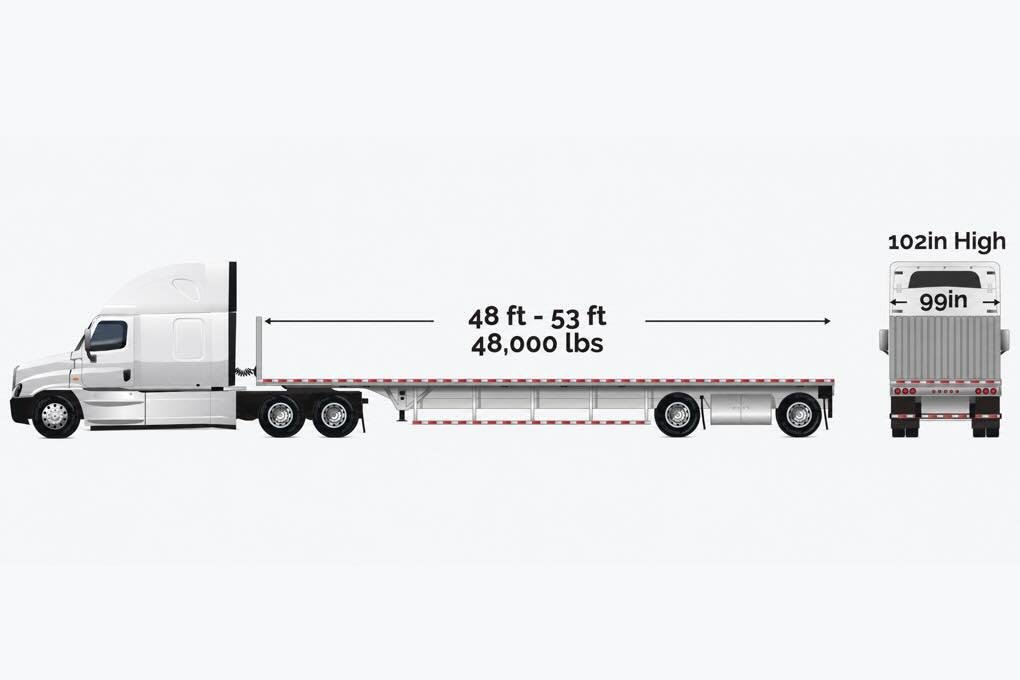
Yes, expedited freight isn’t limited to small packages – carriers can handle oversized, overweight, and otherwise challenging loads by using the appropriate equipment and planning. If you have freight that exceeds the dimensions or weight of a typical box truck, an expedited provider can dispatch larger trucks or specialized trailers to accommodate it, still with the express service approach. For example, if you need to expedite a large piece of machinery or 40,000 lbs of materials, the company could send a 53′ dry van trailer (enclosed semi-trailer) which can handle up to ~44,000 lbs, or a 48′–53′ flatbed for very bulky items (up to ~48,000 lbs capacity). These would essentially be treated as a dedicated express truckload, often with team drivers to maintain nonstop transit.

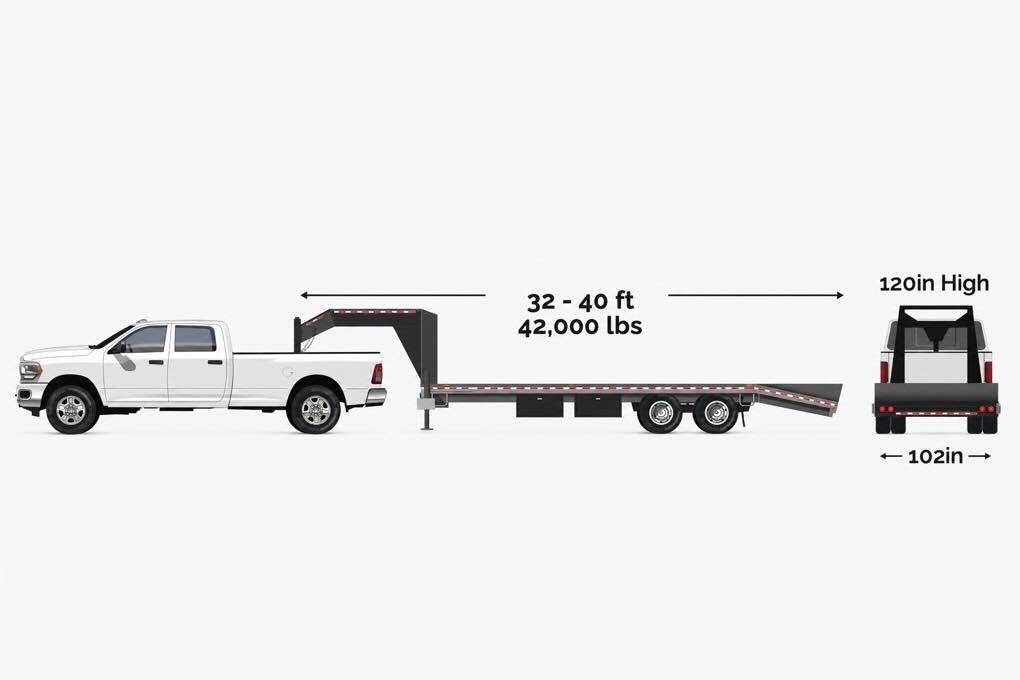
For true oversize loads (dimensions that exceed legal width/height/length), expedited carriers can utilize flatbed hotshot setups or lowboy trailers and obtain the necessary permits to move the load quickly. “Hot shot” originally often meant a pickup with a flatbed trailer – many of those trailers can haul heavy construction or farm equipment that is too big for a box truck. They might not carry 48k lbs like a semi, but there are gooseneck hotshot trailers that haul 10k-20k lbs and handle items like tractors, large pumps, pipes, etc. If the load is wider than 8.5 feet or taller than ~8-9 feet (the limits of a dry van), a flatbed or step-deck is used, and the carrier will likely arrange escorts or permits as needed even while expediting.

What is a dedicated carrier in trucking and why would I need one?

A dedicated carrier in trucking refers to a setup where a truck (and driver) is assigned exclusively to a specific shipper or even a specific route/contract, rather than carrying loads for various customers. There are a couple of contexts to this term. In one sense, having a “dedicated carrier” might mean a logistics provider dedicating a vehicle to your shipment only – which is exactly what happens in expedited shipping. The truck is not shared; it’s a dedicated truckload just for you, from pickup to delivery. This is in contrast to something like LTL (less-than-truckload) where your freight shares space with other shippers’ freight. Using a dedicated carrier in this way is crucial for urgent freight because it ensures no other stops or priorities will interfere with your delivery. As we discussed, that’s how they achieve faster transit and reduce risk.

Another meaning is a longer-term dedicated contract: some companies hire a carrier to dedicate trucks to their business exclusively, running a set lane or on standby for them. For example, a retailer might have a dedicated fleet for daily store deliveries. In the context of expedited trucking, you might not necessarily need a year-round dedicated truck, but you do benefit from the service style of a dedicated carrier on each shipment – meaning you get that one-truck-one-customer focus.

What types of trucks are used for expedited ground transportation?

Expedited ground services can deploy a variety of trucks and vans, depending on the size of the shipment and the urgency. Common vehicle types in expedited trucking include:

  • Sprinter Vans / Cargo Vans: These are large high-roof cargo vans (like the Mercedes Sprinter, Ford Transit, or RAM ProMaster). They can typically carry 2–4 pallets or up to ~3,000 lbs. Sprinter vans are very fast and nimble, making them great for smaller hot shot loads and same-day deliveries. They excel at shorter distances and can often go door-to-door quickly.

  • Small Straight Trucks (Box Trucks): These are the box trucks we’ve been discussing, ranging roughly 10–16 feet in box length, capacity up to ~5,000 lbs. They can handle larger volume and weight than a van – about 6 to 8 pallets – and are used when the shipment won’t fit in a van but still needs fast, dedicated delivery. They’re a workhorse of expedited ground fleets.

  • Large Straight Trucks: Sometimes called medium-duty trucks, these 22–26 foot box trucks can carry around 10,000 lbs or 12+ pallets. They are used for bigger urgent shipments that still require a dedicated truck (for example, an entire small factory equipment load that must go now). They have the advantage of fitting more cargo while still being more agile than a semi-trailer.

  • 53′ Dry Vans (Semi-Trailers): Expedited services also utilize full 53-foot trailers for very large rush loads or full truckload expedites. A dry van trailer can take up to 44,000 lbs of freight (about 26 standard pallets). In an expedited scenario, a semi-truck and trailer are dispatched dedicated to one customer’s load, running nonstop (often with team drivers) to deliver as fast as possible. This is essentially expedited truckload service.

  • Flatbed Trucks and Hot Shot Rigs: For oversized or heavy equipment that won’t fit in a box, flatbed trucks are used in expedited transport. This could be a standard 48′ or 53′ flatbed trailer (up to ~48,000 lbs capacity) for really large items, or smaller hot shot flatbeds. Hot shot trucking often involves a heavy-duty pickup truck pulling a gooseneck flatbed trailer – used for things like construction machinery, farm equipment, or long materials. These setups are great for urgent loads that are too large or unwieldy for enclosed trucks. Expedited flatbed services, like those HotShotTrucking.com offers, ensure even oversized freight can be rushed to its destination quickly

Do you need a commercial driver’s license (CDL) to drive a box truck?

It depends on the truck’s gross weight rating and the regulations in your region. In the United States, a commercial driver’s license (CDL) is generally required to operate any vehicle with a Gross Vehicle Weight Rating (GVWR) of 26,001 pounds or more. Many small and medium box trucks have a GVWR just under that threshold (for example, 10-16 foot box trucks often have GVWRs around 14,000–25,999 lbs). These trucks can typically be driven without a CDL. In fact, rental moving trucks (like 16’ or even some 24’ U-Haul trucks) are deliberately spec’d under 26k so that everyday drivers can use them without a commercial license.

However, the largest straight trucks (like a heavy-duty 26’ box truck with a lift gate, fully loaded) might exceed 26,000 lbs GVW, which would require a Class B CDL to drive legally. Additionally, if the truck is used to transport certain quantities of hazardous materials or passengers, a CDL with endorsements might be needed regardless of weight. It’s also worth noting that even if not required by law, some companies prefer hiring CDL-certified drivers for their box trucks for insurance and safety reasons. But one advantage in the expedited freight industry is that box trucks broaden the driver pool – since a lot of expedited straight trucks don’t hit the CDL weight threshold, carriers can utilize highly qualified drivers who may not have a CDL but do have the skills to operate the vehicle safely. Always check your local regulations, as some states or countries have specific rules. In summary, for most straight trucks under 26,000 lbs, no CDL is required to drive, but for anything above that (or for certain cargo types), a commercial license is mandatory.

What is expedited freight shipping?

Expedited freight shipping is a transportation service that prioritizes speed and time-definite delivery above all else. Unlike standard shipping, which might consolidate loads and follow a set schedule, expedited shipments travel by the fastest feasible means to get to their destination by a strict deadline (often same-day or overnight). In practical terms, this often means using a dedicated vehicle (and sometimes dedicated drivers) that goes directly from pickup to delivery without intermediate stops. Expedited freight can be carried out by ground – using sprinter vans, box trucks, cargo vans, straight trucks, etc. – or by air (next-flight-out services or air charters), or a combination of both. The goal is always the same: minimize transit time.

Businesses use expedited shipping when they have time-critical freight such as last-minute orders, emergency parts, perishables that need fast delivery, or any situation where the standard transit time would be too slow. Expedited services are often available 24/7, meaning you can initiate a shipment late at night or on a weekend and still get it moving immediately. Because of the priority on speed, expedited freight typically involves proactive monitoring and real-time tracking so customers know the status of their shipment at all times. Keep in mind, expedited shipping tends to cost more than regular shipping due to the dedicated resources and urgency involved. However, it’s a vital option for many industries where delays are not acceptable. In short, expedited freight is all about accelerating the supply chain – it’s the express lane for cargo, ensuring your delivery arrives as fast as possible, often much faster than typical ground or economy services.

What is hot shot trucking and what is it used for?

Hot shot trucking is a term for a form of expedited freight service that involves hauling small, time-sensitive loads, usually directly to their destination on short notice. The phrase “hot shot” originated in the Texas oilfields, where pickup trucks would rush critical equipment or parts out to remote drilling sites in an emergency – those quick runs were called hot shot deliveries. Today, the meaning has expanded to describe any urgent, on-demand shipment (typically smaller in size) that needs to be delivered fast. Hot shot loads are often hauled by smaller trucks rather than the big 18-wheelers. Common hot shot vehicles include one-ton pickup trucks pulling gooseneck flatbed trailers, medium-duty flatbeds, or even box trucks and vans – basically whatever is appropriate to the load.

The key characteristics of hot shot trucking are speed, flexibility, and direct delivery. A hot shot trucking service will take a call at any time, quickly put the freight on a truck, and send it straight to the customer with no detours. Hot shot drivers tend to operate on tight timelines, often forgoing the usual schedules and routes that larger freight companies follow. According to HotShotTrucking.com, hot shot trucking is focused on “speed and delivering time-critical loads… on short notice and directly to their destination as fast as possible.” This often means same-day or overnight delivery of a load that might be just a few pallets or a single piece of equipment.

What are hot shot loads in expedited freight?

Hot shot loads are the shipments or freight items that are carried via hot shot trucking. These loads are usually smaller, time-sensitive freight that a customer needs delivered as quickly as possible. A hot shot load could be anything from a single pallet of manufacturing parts, to an oversized piece of machinery, to a crate of vital repair equipment. The defining feature isn’t the content itself, but the urgency and size: hot shot loads tend to be those that don’t fill a standard truck and need special rush handling.

For example, if an oilfield operation has a drill bit that broke, the replacement part (weighing a couple thousand pounds) might be a hot shot load – it’s critical to operations and must be delivered immediately, but it’s not huge like a full rig move. Or in construction, a last-minute batch of custom pipes needed on site could be a hot shot load. In many cases, hot shot loads arise unexpectedly (emergency orders, last-minute demands) and thus are not scheduled on regular freight routes. They are posted on load boards or phoned out to hot shot carriers who can pick them up quickly.

Hot shot loads often travel on non-CDL hotshot setups (pickup + trailer) or straight trucks because they might be a single piece of equipment or a small set of pallets. These loads also frequently require door-to-door direct transport – meaning the same vehicle picks up and delivers without transfers. Industries like agriculture, mining, energy, and construction regularly produce hot shot loads when a critical part breaks or inventory runs out in the field. Even small business supply chains might use hot shots; for instance, a printing company could hot-shot a pallet of printed materials to a conference in another city that starts the next day.

How is hot shot delivery faster than regular freight services?

Hot shot delivery is faster than regular freight for several reasons, all rooted in the way the service is structured for speed. First, hot shot shipments skip consolidation – in normal freight, your goods might wait until a truck is full or go through a hub and get transferred to another vehicle. Hot shot loads go immediately once ready, with no waiting for other freight. The truck is dispatched as soon as you request the service, even if it’s just carrying your single pallet. This immediacy shaves off a lot of time compared to, say, LTL freight that might only depart the next day or next scheduled run.

Second, hot shot deliveries are direct and dedicated. The driver isn’t making multiple stops to drop off other customers’ freight along the way. They take a straight-line route from pickup to destination, which is obviously the fastest possible path. There are no detours for additional pickups or deliveries that would be common in multi-stop or hub-and-spoke operations. Hot shot drivers also plan for the fastest routes, often aided by real-time traffic info and the freedom to reroute around congestion as needed. As HotShotTrucking.com puts it, they eliminate hand-offs and transfers, delivering a smoother and quicker shipping experience.

Jrag

10/10 would recommend.

Came through for us when inclement weather was going to delay a shipment for a client event that would have arrived after the event ended! Delivery was made when they said it would be there and our client was thrilled.

Jazmin

Jragl

Verified Review

Champion Motors

Arrived at the pick up location and delivered when they said.

We normally deal with tow truck drivers and they NEVER show up or deliver when they say they will. Justin Peroli was MORE THAN accommodating and made every step of the process very easy and pleasant for us.

Champion Motors

Verified Review

Industrial Structures

Good at communicating and finding me a driver in quick fashion.

John Mark was good at communicating and finding me a driver in quick fashion. Also sent regular updates indicating driver location.

Jeff

Industrial Structures

Verified Review

Woodruff

I have been dealing with hot shot services for almost 40 years.

Todd was by far the best one I have ever worked with. Everything was as smooth as it could have been.

Rusty

Woodruff Supply Company

Verified Review

Read More Amazing Reviews of HotShotTrucking.com

All Trustpilot Reviews
CTA Hero Star Background
TOP