
Skip to content

Trucking Flatbed

Choosing a flatbed starts with your freight's height, weight and how it loads. HotShotTrucking.com dispatches flatbeds, step decks, RGNs, Conestogas and hot shots matched to your load. One dispatcher stays with it from quote to delivery.

Flatbed Trucks

Trusted By Our Most Valuable Partners

FLATBED TRUCKING

Open-Deck Trucks Matched to Your Freight

Choosing a flatbed starts with the freight: its height, its weight and how it loads. The wrong trailer can mean an over-height permit, a second truck or a load that won’t fit.

HotShotTrucking.com dispatches flatbeds, step decks, RGNs, Conestogas and hot shots matched to the load. One dispatcher stays with it from quote to delivery.

Securing the load is part of the job. We confirm dimensions, weight and loading method before the truck is booked, so the driver arrives with the right straps, chains and tarps. For loads over height or width, we arrange the permits and escorts the route needs.

These three trucks carry most open-deck freight. The next section explains what flatbed trucking means and how to pick the right trailer.

PARTIAL LOADS hot-shot-truck

Hot Shot Trucking

A pickup with a gooseneck flatbed carries up to 16,000 lbs on a deck up to about 40 ft. It is often the quickest open-deck truck to book. Many hot shots can pick up within hours of your call. Gooseneck trailers often have ramps for small equipment.

Hot Shot Trucking Services about Partial loads
FULL-SIZE FLATBEDS flatbed-trucks

Flatbed Trucks

A 48 to 53 ft flatbed takes up to 48,000 lbs of steel, lumber and machinery. Loads can be tarped for weather. Step decks, RGNs and Conestogas are available for taller, heavier or weather-sensitive loads. The right choice depends on height, weight and how the freight loads.

Flatbed Services about Full-size flatbeds
WHEN IT NEEDS COVER large-straight-trucks-1

Large Straight Trucks

Crated freight that fits through a door may ride better in a 22 to 26 ft straight truck, up to 9,000 lbs, out of the weather. Straight trucks often have a liftgate for receivers without a dock. They also keep electronics and finished goods out of the weather.

Straight Truck Services about When it needs cover
Construction workers on a roof
In short

An open deck, loaded from any side

Flatbeds carry freight that loads from the side, top or rear.

Flatbed trucking What it means

What flatbed trucking means

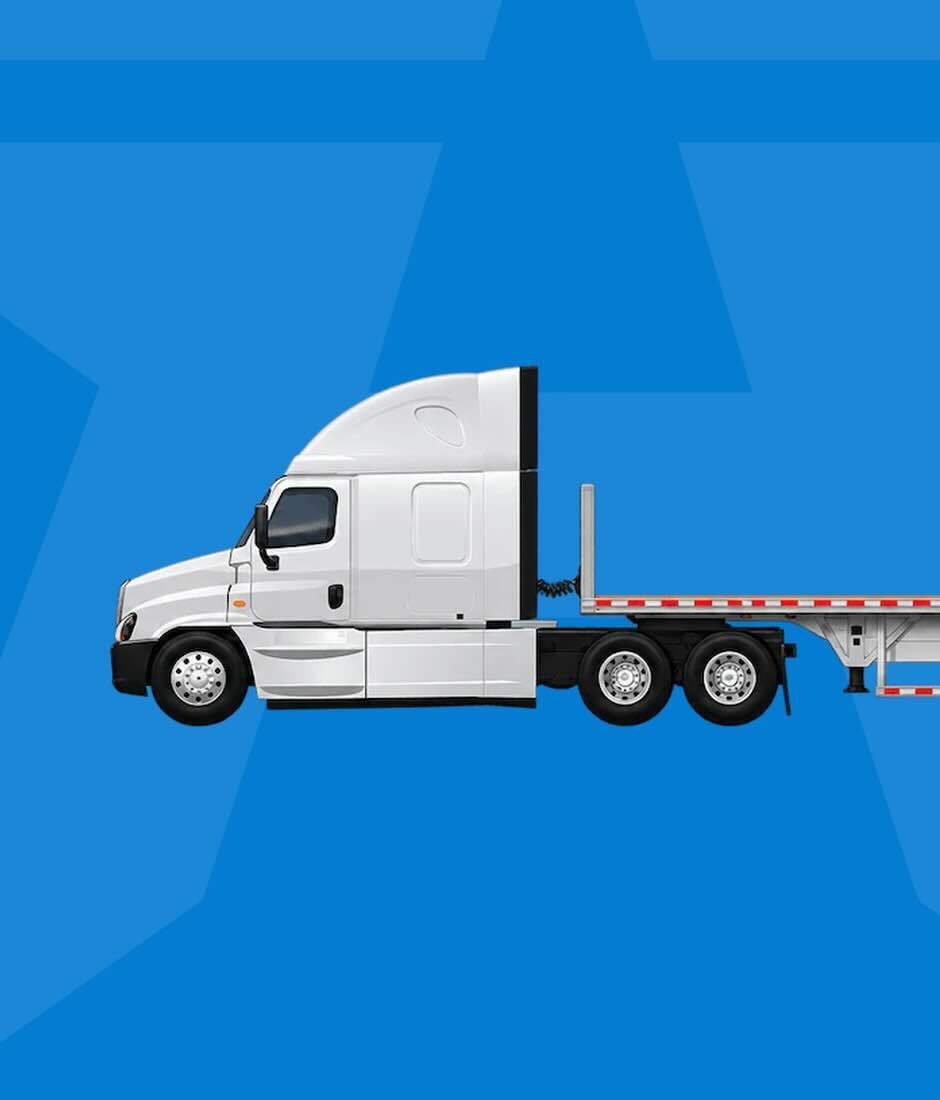
Flatbed means a trailer with an open deck and no sides or roof. Freight can be loaded from the side, the top or the rear, by forklift, crane or ramps.

That suits freight that is long, tall, heavy or oddly shaped. Typical loads include steel beams and coils, lumber, pipe, machinery, building materials, transformers and construction equipment. The trailer you choose depends on the freight, which is where most booking mistakes start.
Flatbed truck
Rule of thumb

Lower deck for taller freight

Step decks, double drops and RGNs keep tall freight under height limits.

Trailer types

Flatbed trailer types

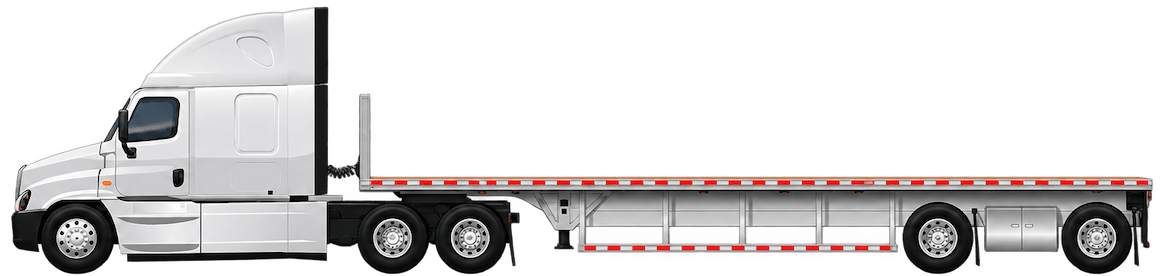
A standard flatbed is 48 to 53 ft long and 102 in wide and carries up to 48,000 lbs. That is larger than a hot shot deck but higher off the ground than a step deck. Its deck sits about 5 ft above the road.

A step deck lowers the rear section for taller freight. A double drop and a removable gooseneck trailer go lower still, for tall or heavy equipment. An RGN's front detaches so machines can drive on. A Conestoga covers the deck with a sliding frame. A hot shot gooseneck carries up to 16,000 lbs on a deck up to about 40 ft for smaller urgent loads.

Each trailer suits a different kind of freight. We match the trailer to your load, so the one that arrives suits how it goes on.

Trailer types compared

Flatbed trailer types compared

Each open-deck trailer suits a different load. Read across a row to see which fits yours, and HotShotTrucking.com can dispatch all five.

Flatbed Trucking Standard 48-53 ft Step deck Lower rear deck RGN Detachable front, low deck Conestoga Sliding cover Hot Shot Trucking Pickup and gooseneck
Heaviest loads Yes: Up to 48,000 lbs Yes: Full semi capacity Yes: Heavy equipment Sometimes: Cover adds weight No: Up to 16,000 lbs
Tall freight No: Highest deck Yes: Lower rear deck Yes: Lowest deck Sometimes: Cover limits height Sometimes: Standard deck
Drive-on equipment No: Crane or forklift Sometimes: With ramps Yes: Front drops down No: Not built for it Sometimes: With dovetail ramps
Freight stays covered Sometimes: With tarps Sometimes: With tarps Sometimes: With tarps Yes: Built-in cover Sometimes: With tarps
Small urgent loads No: Sized for full loads No: Sized for full loads No: Specialized No: Sized for full loads Yes: Built for it
Best when Steel, lumber, pipe Tall machinery Heavy equipment Freight that must stay dry Urgent partial loads

Flatbed Trucking

Standard 48-53 ft
Heaviest loads
Yes: Up to 48,000 lbs
Tall freight
No: Highest deck
Drive-on equipment
No: Crane or forklift
Freight stays covered
Sometimes: With tarps
Small urgent loads
No: Sized for full loads
Best when
Steel, lumber, pipe

Step deck

Lower rear deck
Heaviest loads
Yes: Full semi capacity
Tall freight
Yes: Lower rear deck
Drive-on equipment
Sometimes: With ramps
Freight stays covered
Sometimes: With tarps
Small urgent loads
No: Sized for full loads
Best when
Tall machinery

RGN

Detachable front, low deck
Heaviest loads
Yes: Heavy equipment
Tall freight
Yes: Lowest deck
Drive-on equipment
Yes: Front drops down
Freight stays covered
Sometimes: With tarps
Small urgent loads
No: Specialized
Best when
Heavy equipment

Conestoga

Sliding cover
Heaviest loads
Sometimes: Cover adds weight
Tall freight
Sometimes: Cover limits height
Drive-on equipment
No: Not built for it
Freight stays covered
Yes: Built-in cover
Small urgent loads
No: Sized for full loads
Best when
Freight that must stay dry

Hot Shot Trucking

Pickup and gooseneck
Heaviest loads
No: Up to 16,000 lbs
Tall freight
Sometimes: Standard deck
Drive-on equipment
Sometimes: With dovetail ramps
Freight stays covered
Sometimes: With tarps
Small urgent loads
Yes: Built for it
Best when
Urgent partial loads

Load limits shown are the published figures for each truck type.

Oil pipeline
Four facts

Height, weight, length, loading

These four details pick the right flatbed trailer for your freight.

Choosing Choosing a trailer

Choosing the trailer for your load

While a standard flatbed handles most open-deck freight, the right trailer often depends on one measurement more than any other. Start with height. Tall freight needs a lower deck to stay under legal height limits, which points to a step deck, double drop or RGN.

Next, check weight and length. Heavy loads need a full flatbed or a trailer with extra axles, and long items need a 48 or 53 ft deck. Then think about loading. Freight lifted by crane or forklift fits a standard deck, while equipment that drives on needs ramps or a low deck. Freight that must stay dry suits a Conestoga or tarps.

This makes four facts a practical shortcut to the right trailer. Height, weight, length and loading method decide it, and we match the trailer to all four.

5.0 from 1,600+ reviews on

Know your trailer? Get a flatbed quote.

Send dimensions, weight and how the freight loads. A dispatcher matches the right open-deck trailer and keeps you updated until delivery.

  • Reached out for a quote and received a response within 5 minutes from Chris Noe. Quick with responses and driver updates.

    Ryan
  • Worked with Todd and he made it happen. Called at 9:30am for a hotshot from Dallas to Waller TX. It was offloaded at 4:30pm. Great job!

    Kollin

Request a Quote

Step 1 of 3Origin and Destination Info

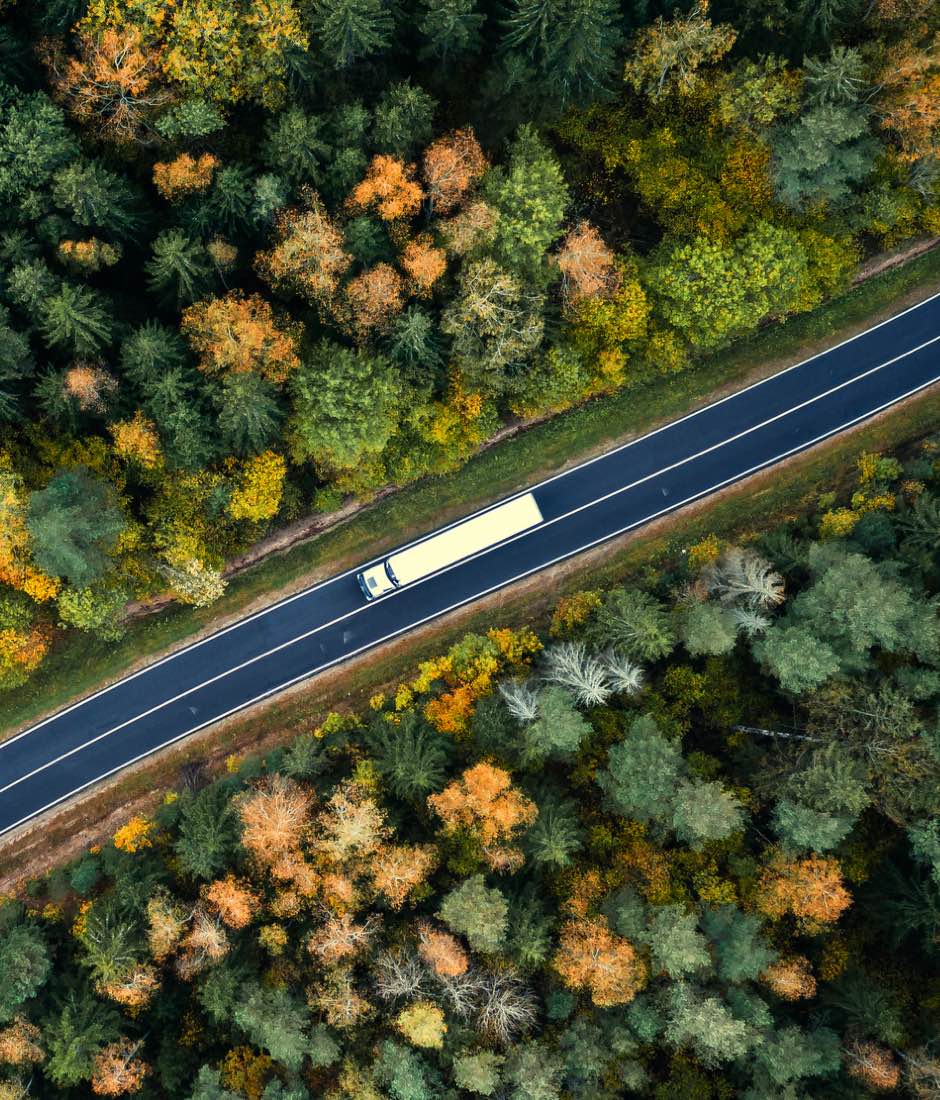
Aerial view of a truck driving on the road
Before pickup

Exact dimensions matter

Accurate size and weight let the trailer and permits be planned together.

Securement Securement and permits

Securement and oversize permits

Flatbed carriers usually secure loads with tiedowns rated for the freight, including chains, binders, straps and edge protection. This ensures the load stays put whenever the truck brakes, turns or hits a rough road.

Steel and machinery are chained down, and lighter freight is strapped. Edge protectors keep straps from cutting into the load, and tarps cover freight that must stay dry. Drivers stop to check the tiedowns during the trip. Loads wider, taller, longer or heavier than legal limits need permits from each state, set routes and sometimes pilot cars.

Give exact dimensions and weight when you book, so the trailer and any permits are planned together. We plan both with you to make sure the load is legal before pickup.

Flatbeds and open decks

Flatbed, hot shot or an enclosed truck?

Full flatbed6 / 6

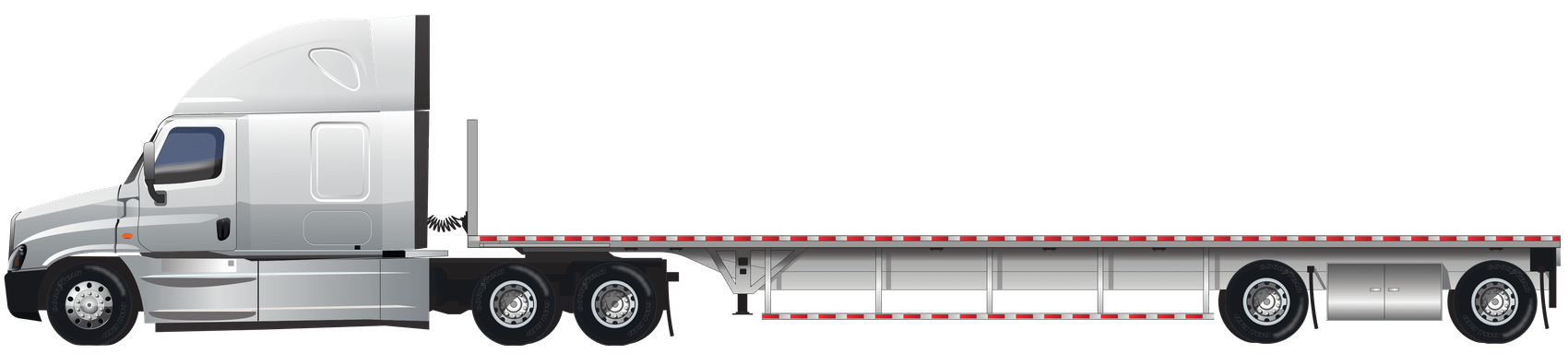
Full flatbed side view
48–53 ft48,000 lbs
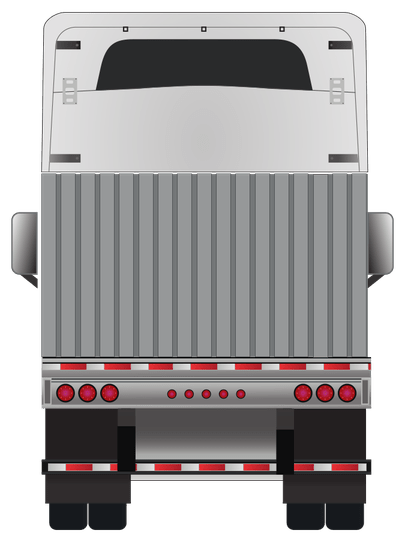
Full flatbed rear view
99 inWide
102 inHigh
Deck length48–53 ft
Payload48,000 lbs
Deck width99 in
Load height102 in
Best for

Steel, lumber, machinery, oversize loads

About full flatbeds

A full 48 to 53 ft flatbed for steel, lumber, pipe and machinery. Share the dimensions up front if the load is wide or tall.

Price a full flatbed

Send the dimensions, weight and how it loads, and we'll match the deck to the freight.

Talk to dispatch(800) 604-2511 Get a full flatbed quote

Trucking by the numbers

Trucking costs by the numbers

$2.336

average cost per mile to operate a truck in 20251

What it means for you

Every mile a truck runs carries the cost of the driver, fuel, equipment and repairs. That is why the trailer type and the miles shape what a flatbed load costs. Matching the deck to the freight keeps you from paying for more trailer than you need.

$3.660

US average retail diesel price per gallon in 20252

Fuel is a large share of flatbed cost, so the right-sized trailer makes each gallon count.

73%

of US freight value moved by truck in 20243

Trucks carry most of the value of US freight, so the trucking choice touches most supply chains.

$11.5 billion

in trucking productivity lost to driver detention in 20234

Time lost waiting at sites shows why loading equipment and site access should be ready.

Worker cutting metal
Honest fit

Open deck only when needed

Freight that loads at a dock and must stay dry is usually better in a van.

Other trucks Flatbed or enclosed

Flatbed, dry van or something smaller

When a flatbed isn't the right fit for your shipment, a dry van might be the answer. Palletized freight that loads at a dock and must stay enclosed usually moves in a 53 ft dry van, which carries up to 42,000 lbs. Refrigerated trailers serve temperature-controlled freight, which needs specialized equipment.

Smaller enclosed loads suit a straight truck or box truck, often with a liftgate. A small open-deck load that is urgent often moves faster on a hot shot. As with most freight, distance, weight, trailer type and timing all affect the cost.

HotShotTrucking.com books flatbeds, dry vans and smaller trucks alike. We match the truck to your freight, so you only book an open deck when the load needs one.

How a flatbed booking works

From flatbed quote to delivery

A flatbed shipment follows six steps. Having dimensions, weight and the loading method ready is the quickest way to get the right trailer.

  1. 01

    Send your load details

    Share dimensions, weight, piece count, pickup and delivery addresses and the deadline. Say how the freight loads and unloads.

    • Dimensions
    • Weight
    • Deadline
  2. 02

    Match trailer, plan permits

    The load is matched to a flatbed, step deck, RGN, Conestoga or hot shot, with permits planned if it is oversize.

    • Step deck
    • Permits
  3. 03

    Confirm the pickup

    You get a confirmed pickup time. The driver knows the site access and who loads at each end.

  4. 04

    Load and depart

    The freight is loaded and secured with chains, binders or straps, tarped if needed, and the bill of lading is signed.

    • Bill of lading
  5. 05

    Drive direct with updates

    The truck drives straight to the delivery address with no terminal stops. You get updates along the way without chasing anyone.

  6. 06

    Deliver with proof

    The freight is unloaded and signed for at delivery. You receive proof of delivery to close out the shipment.

    • Proof of delivery

Oversize and overweight permit rules vary by state.

Expeditor at his desk tracking a shipment
Have ready

Size, weight and loading method

These details let a dispatcher book the right open-deck trailer the first time.

Book with us Booking

Booking flatbed trucking with us

At HotShotTrucking.com, we specialize in open-deck trucks that move your freight from the yard to the site with no transfers. We dispatch flatbeds, step decks, RGNs, Conestogas and hot shots nationwide.

To book, have the dimensions, weight and piece count ready. Note the loading equipment at each end, any tarp needs, site access for a large truck and your dates. The truck carries only your load and drives direct, with no terminal stops. You get updates along the way and proof of delivery at the end.

You'll work one-on-one with a dispatcher who guides your shipment from pickup to delivery. Tell us what you need to move, and we'll handle the rest.

Match Your Freight to the Right Flatbed

Watch on YouTube
The economics of trailers
Episode 11 Oct 19, 2026 22 min

The $90,000 Trailer Sitting Idle: Todd Waldron on Trailer Sharing

Todd Waldron, Chief Commercial Officer at REPOWR, joins host Kevin Carpenter to break down the trailer sharing marketplace that has moved more than 60,000 trailers across 10,000+ carriers and 275 suppliers. A dry van now runs about $50,000 and a reefer up to $90,000, yet the average trailer spends 30 to 40 percent of its life empty or idle. REPOWR lets fleets relocate trailers by renting them out instead of paying a driver to go out of route, and gives carriers and shippers access to equipment right where they need it.

Kevin asks the expedite question: how fast can you actually reposition a trailer? Todd walks through short run pricing, the new loadaway product and a realistic five to seven day window. They also get into trailer tracking, fraud and the guardrails owners set over who hauls their equipment, when owning still beats renting, and how REPOWR's trailer optimization platform balances trailer pools automatically. Then Todd takes on the On Air Gauntlet, and pickles do not fare well.

Todd has 19 years in transportation, including CH Robinson, JB Hunt (where he helped build JB Hunt 360), CEO of Q Carriers, and VP of Carrier Experience at Truckstop.

Freight News
Trucking · Fuel costs

Diesel prices hit a new national record in September

Diesel passed its 2022 record in September, which raises the cost of every flatbed run and rewards matching the trailer to the load.

Oil industry worker
At a glance · September 2026
$5.97
record U.S. average diesel price
$1.97
higher than a year ago

Diesel sets a record

According to Heavy Duty Trucking, the EIA's average U.S. diesel price passed the previous record set in June 2022.

Source: Heavy Duty Trucking, September 9, 2026

Tight refining, high crude

U.S. refineries were running close to full capacity while crude oil prices stayed high, which kept fuel costs elevated.

What it means for you

Fuel is one of the biggest costs of a flatbed run. HotShotTrucking.com matches the trailer to your load, which keeps fuel cost in check.

Expeditor Andy

“I had a single point of contact assigned to our shipment that was fantastic on keeping me updated every step of the way.”

Pamela · Trustpilot
HowWe Work

One Person, Start to Finish

When you call HotShotTrucking.com, a real person answers and stays with your flatbed load from the first call to the signed delivery. That expeditor books the truck, confirms the pickup and handles any change along the way. If the site contact changes, you call the person who already knows your shipment.

  • One contact for the whole move
  • Pickup and site access confirmed
  • Changes handled by the same person
Expeditors Steve and Todd

“I called up at 7:30 pm... one that was secured cancelled at the end of the day. Todd quoted three shipments on the spot... The last shipment was picked up at Midnight.”

Susan · Trustpilot
WhatWe Provide

The Right Mode, Every Time

We start with your dimensions, weight and loading method. That tells us whether a flatbed, step deck, RGN, Conestoga or hot shot fits. If the load is oversize, we plan the permits with you before pickup. You get one quote for the trailer that fits your freight.

  • Trailer matched to height and weight
  • Permits planned for oversize loads
  • Hot shots for smaller urgent loads
Expeditor Steve

“True to word. They did exactly what they said they would do.”

Dan · Trustpilot
WhoWe Are

Honest With You, Always

A flatbed load on a deadline is stressful enough without wondering whether you have the full story. You see the price before you commit and the arrival time as it actually stands. If the truck is held up, you hear it from us first. If a hot shot can carry it, we tell you before you book a full flatbed.

  • All-in quotes before you commit
  • Delays reported first, with a plan
  • Straight answers on which trailer fits

Trucking Flatbed Questions Answered

What does flatbed mean in trucking?

In trucking, flatbed means a trailer with an open deck and no sides or roof. Because the deck is open, freight can be loaded from the side, the top or the rear using a forklift, crane or ramps. Flatbeds carry freight that is too long, tall, heavy or oddly shaped for an enclosed trailer, such as steel, lumber, pipe and machinery. A standard flatbed is 48 to 53 ft long and carries up to 48,000 lbs. Freight is tied down with chains or straps and covered with tarps when it must stay dry.

Which trailer is needed for a load over 8.5 feet tall?

Tall loads usually need a trailer with a lower deck. A standard flatbed deck sits about 5 ft off the ground, so tall freight on it can quickly pass legal height limits, which are set by each state. A step deck lowers the rear section, and a double drop or removable gooseneck trailer sits lower still, which keeps more freight within limits. If no trailer keeps the load under the limit, it needs an oversize permit. Give the exact height of the tallest piece when you ask for a truck.

What is the difference between flatbed, step deck, double drop and RGN?

A standard flatbed has one flat deck about 5 ft off the ground and suits most open-deck freight. A step deck has a lower rear section for taller loads. A double drop has a low well between raised front and rear sections, which handles very tall freight. An RGN, or removable gooseneck, has a front that detaches so the deck drops to the ground and equipment can drive on. Each lower trailer trades some deck length or ease of loading for extra height clearance.

When does a flatbed load need an oversize permit or pilot car?

A load needs an oversize or overweight permit when its width, height, length or weight passes the legal limits for the roads it travels. The limits vary by state, so a cross-country load may need permits from several states. Pilot cars, or escort vehicles, are required when loads pass larger thresholds set by each state, and very large loads may need route surveys or police escorts. Exact dimensions and weight, shared early, give time to plan permits, escorts and the route before pickup.

How often must a flatbed driver check securement?

Federal rules require drivers to inspect cargo and its securement before the trip and then recheck it during the trip. Drivers check the load within the first stretch of driving and again at regular intervals, as well as when they change duty status, adjusting chains, straps and tarps as needed. Freight can shift or tiedowns can loosen with braking, turns and bumps. For shippers, the practical point is that well-prepared freight, with flat bearing surfaces and clear tiedown points, secures faster and travels more safely.

Do I need a forklift or crane at pickup and delivery?

Usually, yes. Flatbed drivers secure and tarp freight, but they rarely load or unload it themselves. Heavy freight needs a forklift or crane at both ends, and the equipment must be rated for the weight and reach required. Equipment that drives on needs ramps or a low-deck trailer and someone to operate it. Tell the dispatcher what equipment is available at each site, so the right trailer is sent and the truck does not wait. Missing loading equipment is one of the most common causes of flatbed delays.

Should I use a Conestoga or a tarped flatbed?

Both protect freight from weather, but in different ways. A tarped flatbed uses heavy tarps strapped over the load, which works for most freight but takes time and may not suit sharp or delicate items. A Conestoga has a sliding cover on a rolling frame, so it loads like a flatbed and closes like an enclosed trailer, with less handling. Conestogas suit finished goods, coated steel and equipment that must stay clean. The frame limits height somewhat, so very tall loads may still need a tarped flatbed or step deck.

What is the difference between a flatbed truck and a pickup?

A flatbed truck has a flat open platform instead of a pickup's walled cargo bed, which makes it easier to load from the sides with a forklift. In freight, flatbed usually means a semi tractor pulling a 48 to 53 ft open trailer. A pickup can pull a flatbed or gooseneck trailer too, which is how hot shot trucking works, carrying up to 16,000 lbs on a deck up to about 40 ft. The semi flatbed carries much heavier and longer loads, while the pickup and trailer suit smaller urgent freight.

What can you haul with a flatbed?

Flatbeds haul freight that is too big, heavy or awkward for an enclosed trailer, or that must be loaded from the side or top. Common loads include steel beams, coils and rebar, lumber and building materials, pipe, machinery, construction and farm equipment, transformers, generators and prefabricated structures. Palletized freight can ride on a flatbed too when it loads by forklift from the side. Freight that must stay dry is tarped or moved on a Conestoga. Very tall or heavy items may need a step deck, double drop or RGN.

Do flatbed drivers need a CDL?

This page is written for shippers, but many people searching for flatbed trucking are drivers. Driving a tractor-trailer flatbed requires a Class A commercial driver's license, and carriers often look for experience with load securement and tarping. Smaller hot shot setups may or may not require a CDL, depending on the combined weight rating of the truck and trailer. Drivers can confirm current license, medical and endorsement requirements with FMCSA before applying for flatbed work or setting up their own operating authority.

Get a quote

Book the right flatbed for your load

Enter your pickup, delivery and date. A dispatcher will match the right open-deck trailer and stay with your freight until it is delivered.

5.0 from 1,600+ reviews on

Request a Quote

Step 1 of 3Origin and Destination Info

John Mark was a pleasure to work with and kept me updated on the driver's progress as it was an urgent and timely delivery we needed 11 hours away.

Kenneth · Verified review on Trustpilot
CTA Hero Star Background
TOP